
Beauty Changes Your Life
Plato, Aristotle, and the Beautiful
with Thomas Jockin
Course Begins Monday July 6, 2026
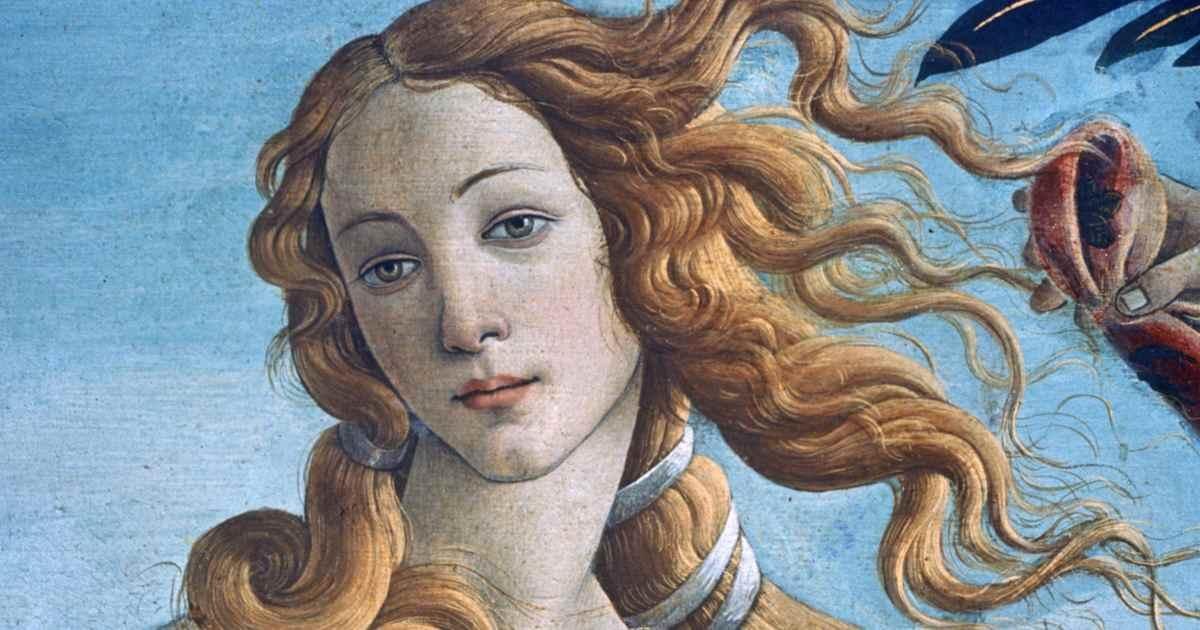
Beauty is not what you like. Beauty is what asks whether you have become worthy of freedom
This four-part course returns to Plato and Aristotle to ask what beauty meant before its modern separation from the sublime. We will explore beauty as memory, form, virtue, love, and redounding presence: the way a particular encounter glimmers beyond itself and invites a changed life.
What is Beauty Changes Your Life about?
Beauty is often seen as something we like. This course begins from a different claim: beauty is what makes an unchanged life impossible.
Beauty is not merely taste, decoration, or pleasure. Beauty is redounding presence: form appearing with such fullness that it returns upon the beholder and makes a claim on life.
Modern thought often gives the sublime the more serious role. The sublime names what overwhelms the self through quantity: vastness, terror, magnitude, rupture, awe, and the impossible scale of nature, technology, history, or divinity. Thiscourse asks whether the modern split between beauty and the sublime has caused us to forget the older ecstatic power of the Beautiful.
For Plato and Aristotle, beauty is not decorative. Beauty awakens memory, educates desire, orders action, and makes life answerable to form. In Plato’s Phaedrus, beauty pierces forgetfulness. In the Greater Hippias, beauty refuses reduction to pleasure, usefulness, or other categories of rational goods. In Aristotle’s Nicomachean Ethics and Eudemian Ethics, virtue makes a person good, but action, and makes life answerable to form. In Plato’s Phaedrus, beauty pierces forgetfulness. In the Greater Hippias, beauty refuses reduction to pleasure, usefulness, or other categories of rational goods. In Aristotle’s Nicomachean Ethics and Eudemian Ethics, virtue makes a person good, but virtuous action is done for the sake of to kalon: the beautiful. And in Plato’s Symposium, beauty compels love to generate, create, and become otherwise.
In an age of algorithmic capture, technological scale, political exhaustion, and spiritual distraction, beauty may be one of the last experiences that recalls us to who we are, rather than merely training us to react harder.
The wager of the course is simple: beauty is not what you like. Beauty is what asks whether your life has become worthy of freedom. This course is for anyone interested in how an encounter can make life answerable to beauty.

Time and Location
Dates: Mondays July 6, 13, 20, 27
Time: 6:30pm CET (Paris) · 12:30pm ET (New York) · 9:30am PST (Los Angeles)
Prices:
400€: Full live course+private session and book
250€: Full live course (4 Weekly Live Zoom Classes; 2+ hours each)
100€: Video course
COURSE CONTENT
Class 1 – Beyond Awe: The Modern Split Between Beauty and the Sublime
July 6 · 6:30pm CET (Paris) · 12:30pm ET (New York) · 9:30am PST (Los Angeles)
Considerations:
Selections from modern accounts of beauty and the sublime, with attention to awe, terror, magnitude, taste, judgment, quantity, and quality.
Gathering:
We will begin with the modern split between beauty and the sublime. This class asks why modernity often grants the sublime more metaphysical seriousness than beauty. We will frame this as a tension between quantity and quality. The sublime overwhelms through scale: more force, more vastness, more intensity. Beauty discloses a qualitative presence. Beauty is not simply “more” pleasant nor agreeable.
Assignments:
Consider an experience of alienation, then contrast it with an encounter of beauty. What changed in your attention, desire, or sense of possibility?
Class 2 – Plato: Beauty, Memory, and the Failure of Reduction
July 13 · 6:30pm CET (Paris) · 12:30pm ET (New York) · 9:30am PST (Los Angeles)
Considerations:
Plato, Greater Hippias and Phaedrus.
Gathering:
This class turns to Plato to clear the field. In the Greater Hippias, Socrates tests definitions of beauty: Is beauty what is useful? Is it what is advantageous? Is it what pleases sight and hearing? Is it ornament, suitability, social honor, or noble appearance? Each definition proves unstable. Beauty resists capture.
The Phaedrus deepens this account by showing that beauty awakens memory. The encounter with beauty is not merely sensory pleasure. It pierces forgetfulness. The beautiful beloved becomes the occasion through which the soul remembers what it once saw more fully.
Assignments:
Consider one encounter with beauty that felt less like novelty and more like recognition.
Class 3 – Aristotle: What Would It Mean for a Life to be Beautiful?
July 20 · 6:30pm CET (Paris) · 12:30pm ET (New York) · 9:30am PST (Los Angeles)
Considerations:
Aristotle, Nicomachean Ethics and Eudemian Ethics, especially the claim that virtuous action is done for the sake of to kalon. We will draw from De Anima and On Memory and Recollection only where they help clarify how memory, phantasm, desire, and judgment make ethical action possible. Agathon’s phrase from Nicomachean Ethics, “art beloved of fortune,” will remain in the background as a provocation.
Gathering:
This class asks one central question: what would it mean for a life, not just an artwork, to be beautiful?
Aristotle repeatedly describes virtuous action as action done for the sake of to kalon: the noble, the fine, or the beautiful. Virtue makes actions, persons, and lives good. But virtue itself is ordered toward the Beautiful. Courage is not merely fear management. Temperance is not merely appetite control. Generosity is not merely redistribution. Each virtue becomes fully intelligible when the action is not only beneficial or correct, but beautiful.
We will connect this ethical account to Aristotle’s treatment of memory as a supporting thread. Thought and action do not happen in a disembodied void. Intellective activity works with phantasms: image-like presentations retained through perception and memory. Here we will use Agathon’s phrase “art beloved of fortune” to think about the beautiful life. If art gives form, and fortune names what exceeds our control, then a beautiful life is not merely planned, optimized, or engineered. It is formed through action in the presence of contingency.
then a beautiful life is not merely planned, optimized, or engineered. It is formed through action in the presence of contingency.
Assignments:
Choose one virtue: courage, temperance, generosity, justice, truthfulness, magnificence, magnanimity, or friendship. What would this virtue look like if practiced only for utility, reputation, or pleasure? What changes when it is practiced for the sake of the Beautiful?
Class 4 – Plato’s Symposium: Beauty Compels, Love Generates, Life Must Change
July 27 · 6:30pm CET (Paris) · 12:30pm ET (New York) · 9:30am PST (Los Angeles)
Considerations:
Plato, Symposium, especially Agathon’s speech and Diotima’s speech.
Gathering:
The final class returns to Plato’s Symposium to gather the whole course into one question: why does beauty compel one to change one’s life? Agathon’s speech on Love gives us a crucial clue. Love is drawn toward beauty, but love also brings beauty into action. Love orders, softens, persuades, generates, and compels. Beauty’s power is not the force of domination, but the strange authority of attraction. Diotima then deepens the account. Eros is not simply the desire to possess beautiful things. It is the desire to generate and give birth in beauty.
The final class returns to Plato’s Symposium to gather the whole course into one question: why does beauty compel one to change one’s life? Agathon’s speech on Love gives us a crucial clue. Love is drawn toward beauty, but love also brings beauty into action. Love orders, softens, persuades, generates, and compels. Beauty’s power is not the force of domination, but the strange authority of attraction. Diotima then deepens the account. Eros is not simply the desire to possess beautiful things. It is the desire to generate and give birth in beauty.
Beauty is the condition in which life becomes fruitful. The beautiful body, the beautiful soul, beautiful laws, beautiful forms of knowledge, and finally the Beautiful itself are intensifications of the same demand: become capable of loving what is more real, more ordered, more worthy.
Here we return to the course’s central claim: beauty changes your life. The encounter with beauty does not leave the spectator intact. It asks for conversion, not as moral scolding, but as erotic necessity.
By the end, we will ask whether beauty is redounding presence: form appearing with such fullness that it overflows the object, returns upon the beholder, and makes life answerable. The sublime overwhelms through magnitude. Beauty asks for the harder thing: that we become worthy of what has appeared.
By the end, we will ask whether beauty is redounding presence: form appearing with such fullness that it overflows the object, returns upon the beholder, and makes life answerable. The sublime overwhelms through magnitude. Beauty asks for the harder thing: that we become worthy of what has appeared.
Assignments:
Write a short reflection on this claim: “How might beauty change my life?” Is beauty capable of making an ethical demand? Is love complete if it does not generate something in beauty? What would it mean for a life to become worthy of freedom?
About your Teacher
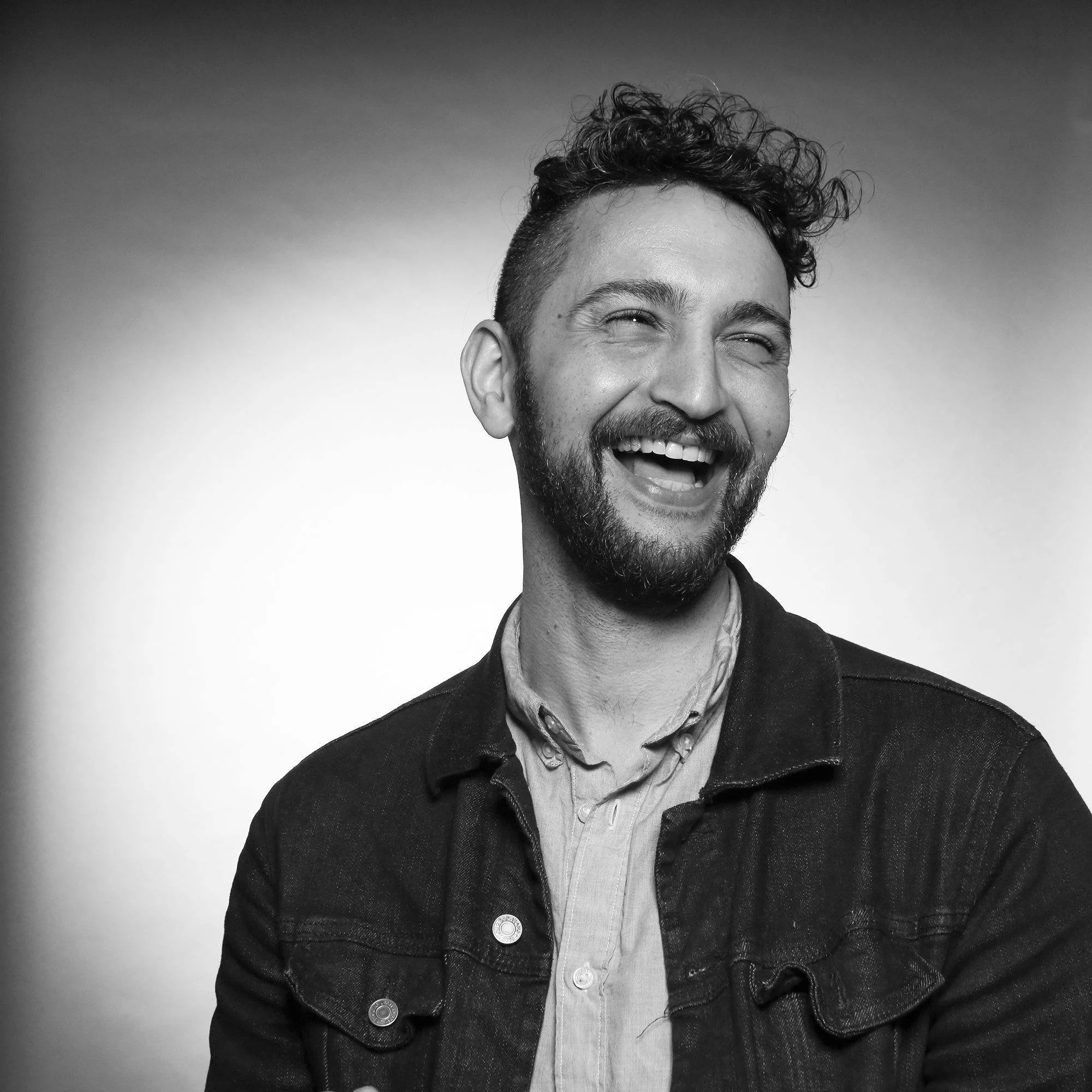
Thomas Jockin
Thomas Jockin is a designer, educator, and writer whose work asks how beauty forms attention, memory, and judgment. Trained in graphic design and typography, he approaches classical philosophy through the discipline of form: how things appear, how they claim one’s attention, and how particular encounters can change what a person loves.
He holds an MFA in Graphic Design from Liberty University and a BFA in Communication Design from Parsons School of Design. He teaches graphic design at Mount Saint Mary’s University and has previously taught at CUNY Queens College, CUNY City College, SUNY Fashion Institute of Technology, and Pratt Institute. His professional design work includes clients such as Google, Express, and Starbucks, and he is the founder of TypeThursday, an international salon and critique community for type and design.
Thomas has also developed and taught philosophy courses through Halkyon Academy, including Plato: On Beauty and Virtue, a lecture series on beauty across six Platonic dialogues. His teaching brings studio practice into conversation with Plato, Aristotle, memory, perception, and the beautiful. He is the co-author, with O.G. Rose and Javier Riviera, of A Philosophy of Glimpses, a treatise on metaphysics, phenomenology, and the experience of lack.
Website: https://thomasjockin.com/