Essays
Books
books




Essays
Books
The values which once drove modernization now exhibit clear signs of exhaustion. Throughout modern literature, we find widespread testament to alienation, rootlessness, estrangement, apathy, and resentment.
The Tree of Life is a series of intimate, unscripted dialogues, Dr. Marc Gafni and Andrew Sweeny reawaken the Tree of Life as what it has always been: not a static diagram or mystical abstraction, but ten living reality stories—the deep narrative structures through which Cosmos, culture, and the human soul unfold.
Traces, Light-Prints (volume 1) is a cycle of diptychs and triptychs written over a long stretch of time. More than a volume of collected poems, it’s a relevant bridge established between the author’s earlier and more recent works, a unifying opus and poetic vision patiently honed, brought into focus and driven.
A love story as old as time itself. In The Infinite Now, Tom Amarque traces the eternal cycle of union, loss, and creation.
This book is a lyrical reflection on Dr. John Vervaeke’ massive and influential YouTube series Awakening from the Meaning Crisis. In this volume of essays, YouTuber, poet, and essayist Andrew Sweeny distills the core ideas into poetic, accessible meditations. This is not a summary—it’s a dialogue. A jazz-like engagement.
The subject matter of modern philosophy has gone by various names: the cogito sum, transcendental subject, da sein, or the dividual. However, these descriptions do not merely refer to subject matter for philosophers, but are a description of a “subiectum” which is prior to the world and which accounts for its being.
A meditative companion to Rudolf Steiner’s path of inner development. What does it mean to walk a spiritual path in an age of noise and distraction? Alchemy of Soul is not a commentary but a resonance — a living invitation to deepen the journey of self-initiation described in Rudolf Steiner’s How to Know Higher Worlds.
It is part textbook, part transcription of an online course, & part poetic grimoire. A grimoire is a fancy term for a collection of magical practices and ideas. Do you believe in magic? Does anyone really believe or disbelieve in magic? Maybe it is more about a kind of feeling. A special flavor of attention, energy and embodiment. A collection of interests in symbolism, manifestation, intention, ritual, ancient wisdom and the emancipatory vibe of all things wondrous
Joe Ross’s poetic work, Where Was The Flag B–E–F–O–R–E?, is an intricate meditation on existence, perception, and transformation. It invites the reader into a dynamic interplay between philosophy, spirituality, and cultural reflection, using language as a fluid medium through which meaning constantly re-emerges. The work resists traditional narrative structure, instead embodying a cyclical and recursive rhythm that mirrors the evolving nature of thought and experience.
In this book, Tom Amarque disentangles the concept of will from its historical context and transforms it in a contemporary way with the aim of arriving at a conception that does justice to today's crises and demands.
108 Songs for the Red Goddess is a raw and devotional collection of poems that defy convention, offend modern sensibilities, and challenge the pillar saints' religiosity with their bold, erotic message. Andrew Sweeny’s work is part rebellion, part reverence, and a spontaneous exploration of longing, crisis, and illumination.
A deep and practical study of Gurdjieff’s writings, understood on their own terms, reveals a profound vision. Gurdjieff indicates clearly, and at times staggeringly so, that his "system", commonly referred to as the Fourth Way or the Work, is the continuation of Christ’s original doctrine.
Dutch philosopher Bernardo Kastrup joins the podcast to talk about the daimon, the topography of ideas, idealism and the end of the meaning crisis.
Where are we in this 'time between worlds', and what are the possible and probably outcomes of our current trajectories. We are facing a crisis, while at the same time out institutions do not seem fit or able to solve these problems.
Ken Wilber, founder and creator of Integral theory, is guest on the show!
We did try to make sense of the cultural polarisation of 2018: What are the chances, stressors and problems of our time?
What does integration of left and right values mean?
Dr. Jordan B. Peterson is Professor of Psychology at the University of Toronto and author of Maps of Meaning: The Achitecture of Belief. He entered the public sphere when he decided to take a stand against PC-Culture, Identity Politics and the pathologies of postmodernism. In this podcast we are talking about a wide array of topics, all pertaining to the end of postmodernism.
Stephen Hicks is a Professor for Philosophy and author of the very good book 'Explaining Postmodernism'. Logically, we talk a lot about the history, aspects, traits and problems of postmodernism.
Dr. Gad Saad is a evolutionary psychologist and Professor of Marketing at Concordia University in Montreal. He writes a blog for Psychology Today and hosts a popular YouTube channel titled "The Saad Truth", where he comments with a lot of humour on the culture war we are facing today. In this episode we are talking about some ideas of his new book 'The Parasitic Mind', and if and why the immunological system might fail in our society.
In this episode I had the distinct pleasure to talk to the godfather und founder of Spiral Dynamics, Dr. Don Beck. We talked a bit about his upcoming new book 'Spiral Dynamics in Action' about the current state of affairs of our culture, Trump, the Ken Wilber controversy, and more. Check it out!
Dr. Chris Ryan is a bestselling book-author and podcaster. He wrote 'Sex at Dawn' and 'Civilized to Death', and is host of the 'Tangentially Speaking'-Podcast.
I had the distict pleasure to talk with him about our love of Spain, the pitfalls of civilization, civilization as a self-replicating superorganism, living the Nomad-life, developmental psychology and the developmental age of us humans today. Maybe we all are just sixteen. Which might explain our problems.
Prof. Raoul Eshelman joins the podcast to talk about his new book "Transcending Postmodernism: Performatism 2.0.", a new post-postmodern pessimism, Trump as a metamodern phenomenon, the limits of metamodernism, commonalities of post-postmodern theories'
David C. Korten is a luminary in the field of economics, a member of the Club of Rome, an author of the order and essentially meets all the criteria for being considered 'wise'. I am quite happy that he took the time to talk to me about his new book, about cosmologies and stories, and about our possible futures.
In this special episode I am talking to Dr. Rick Strassman, leading expert in DMT-Research. We were talking about his new book, 'The Soul of Prohecy', about his DMT-research, about the properties of the DMT-experience, the evolutionary purpose, ethics and a lot more ... enjoy!
How can we understand what is going on in the US? Are movements like Black Lives Matter beyond reproach - or is there some hysteria involved? In this Parallax-Trialogue Tom Amarque speakes with historian and philosopher Thaddeus Russell as well as with philosopher and popstar Alexander Bard on the current state of the US, Black Lives Matter, the history of hysteria and much more.
Is wokeness essentially neo-liberal? Is it a modern or postmodern phaenomomen? Why do leftists and greens betray their agenda? What is the US goal in regard of the ucraine crisis, and in what way is it related to wokeness? And are there religious aspects of woke?
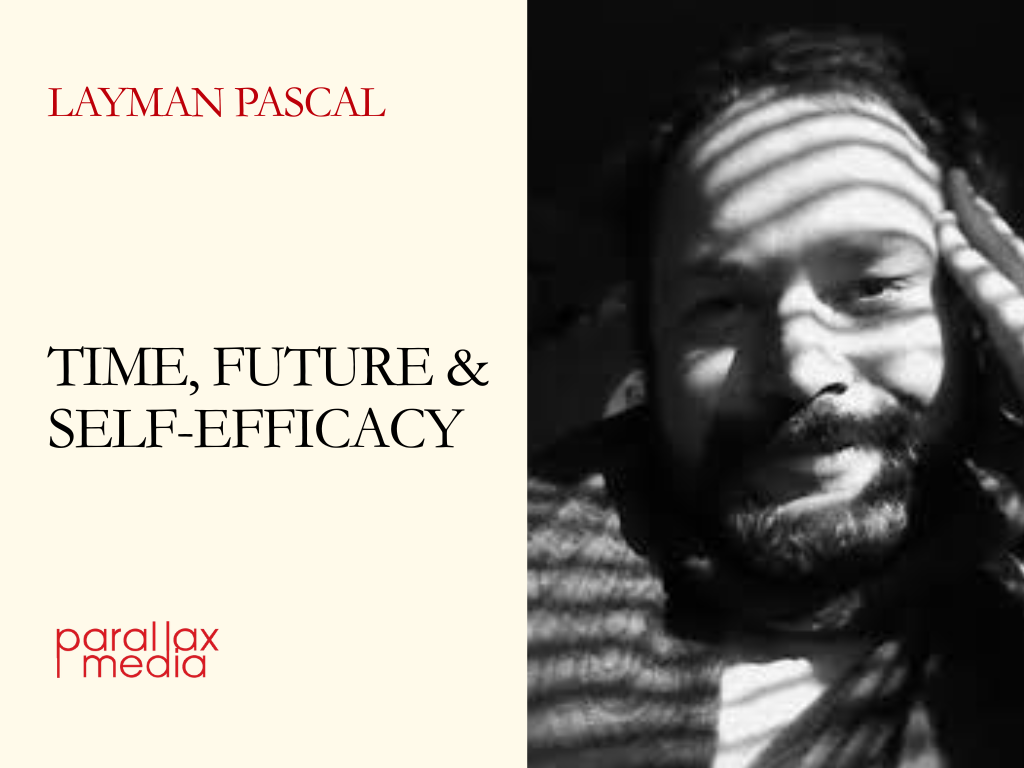
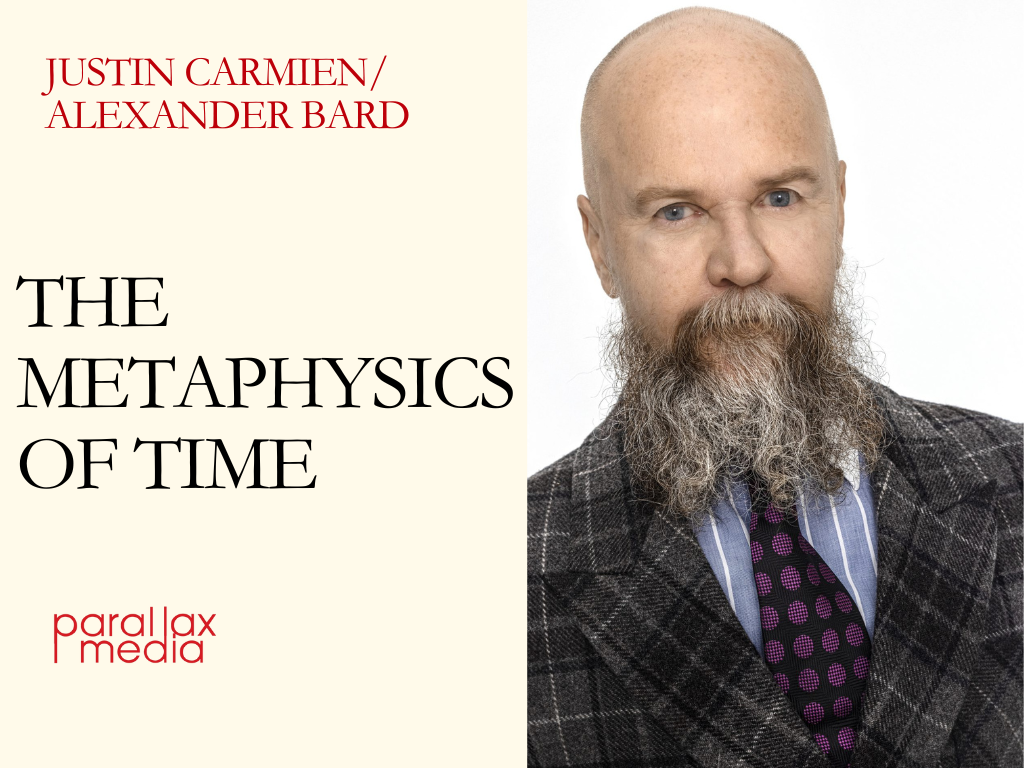
Layman Pascal joins the Podcast to talk about the metaphysics of time in a metamodern age,
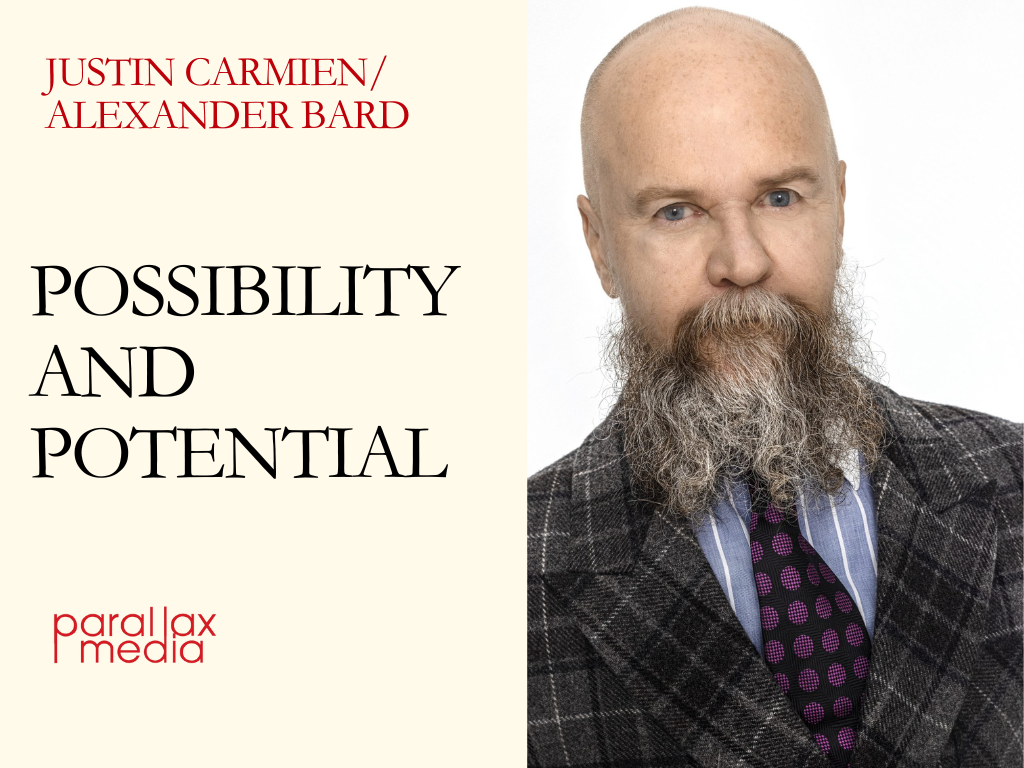
Tom Amarque moderates an intense and wide-ranging conversation between Alexander Bard and Juston Carmien
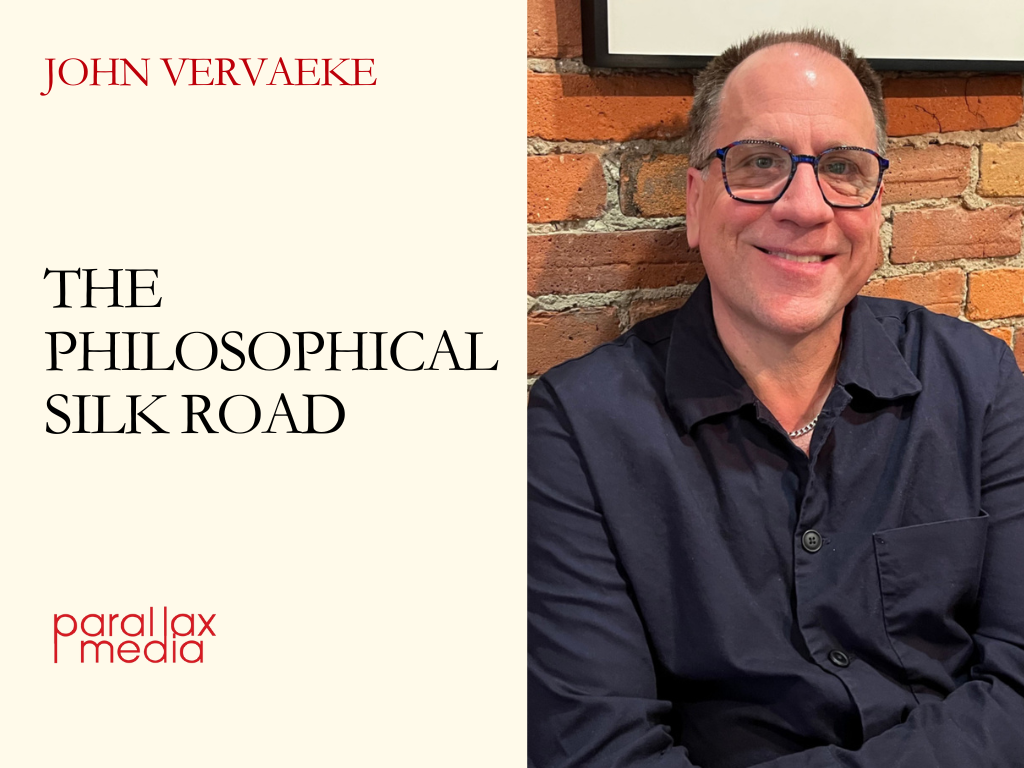
I caught up with John and Chris and explored John's change of perspective from 'the religion that is not a religion' to the philosophical Silk Road. How do we create a meaningful passage between the religions and those who have fallen out of religion? A heartfelt dia-logos and the start of a longer conversation on the subject.
Tom Amarque moderates an intense and wide-ranging conversation between Alexander Bard and Juston Carmien on Vernunft, Metaphysics, Time, and Ethics.
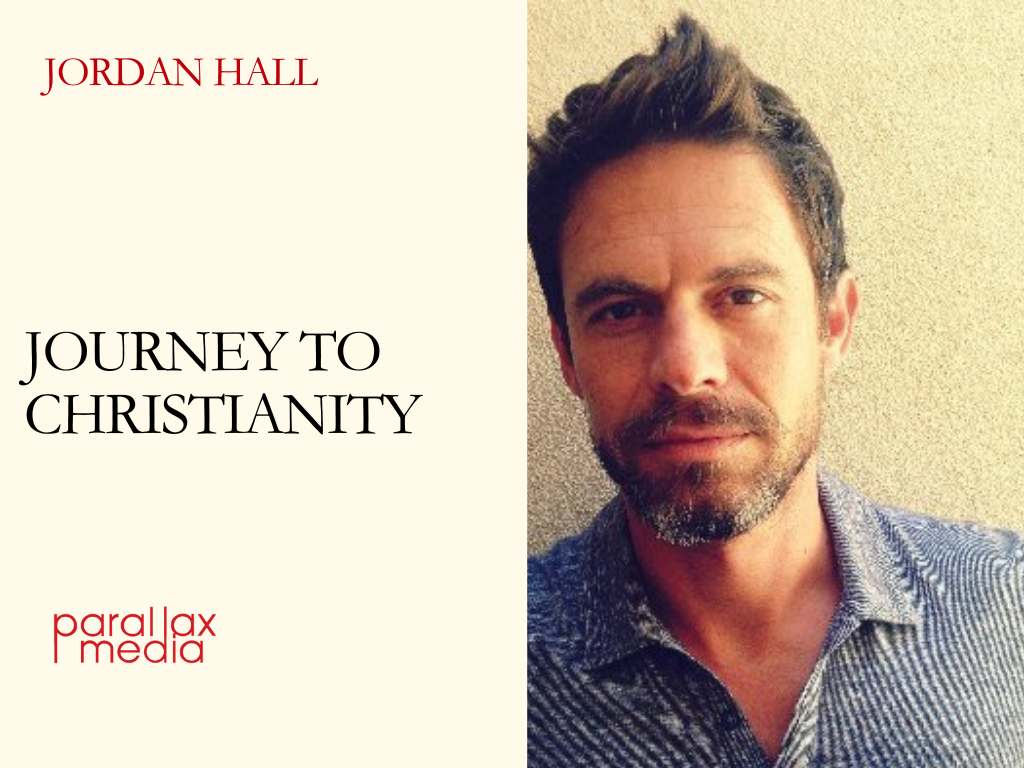
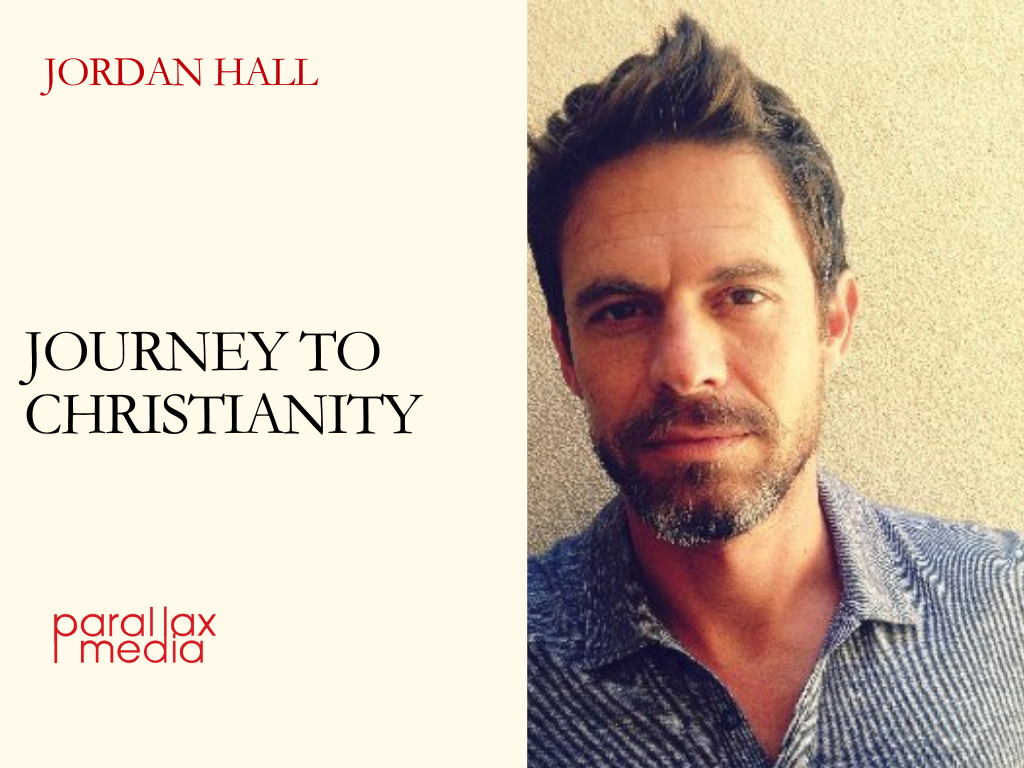
A discussion about Jordan's recent conversion to christianity, his wrestling with religion, and his understanding of deeper concepts like the trinity, prayer, and suffering. An exteremly deep and heartful conversation.
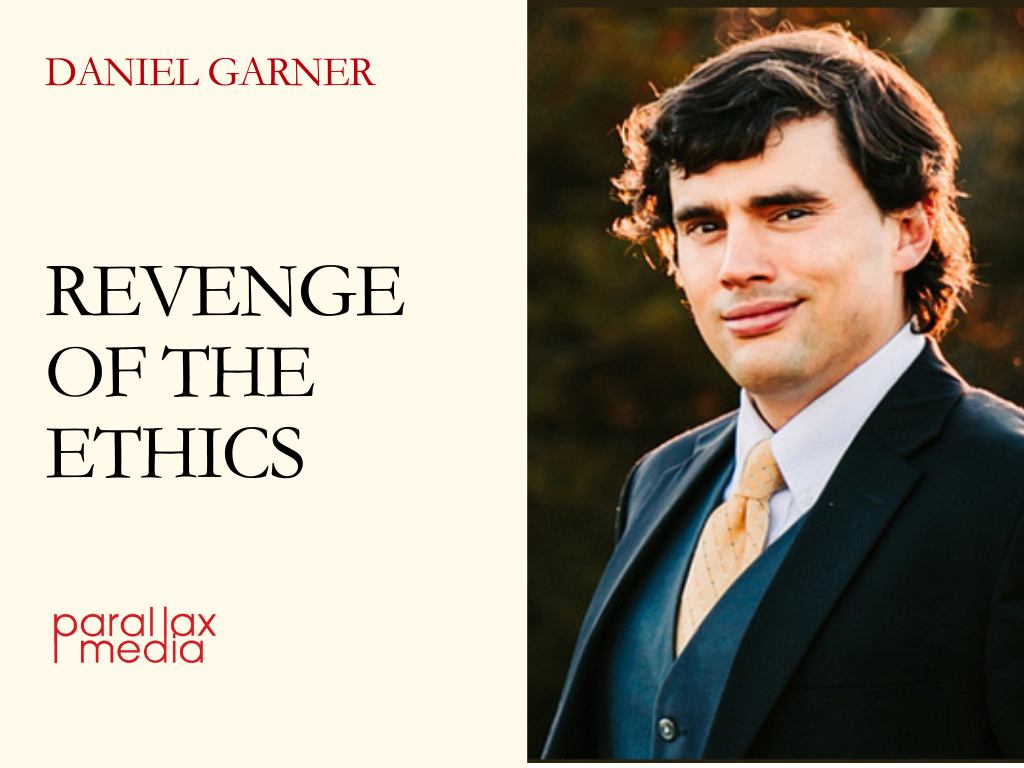
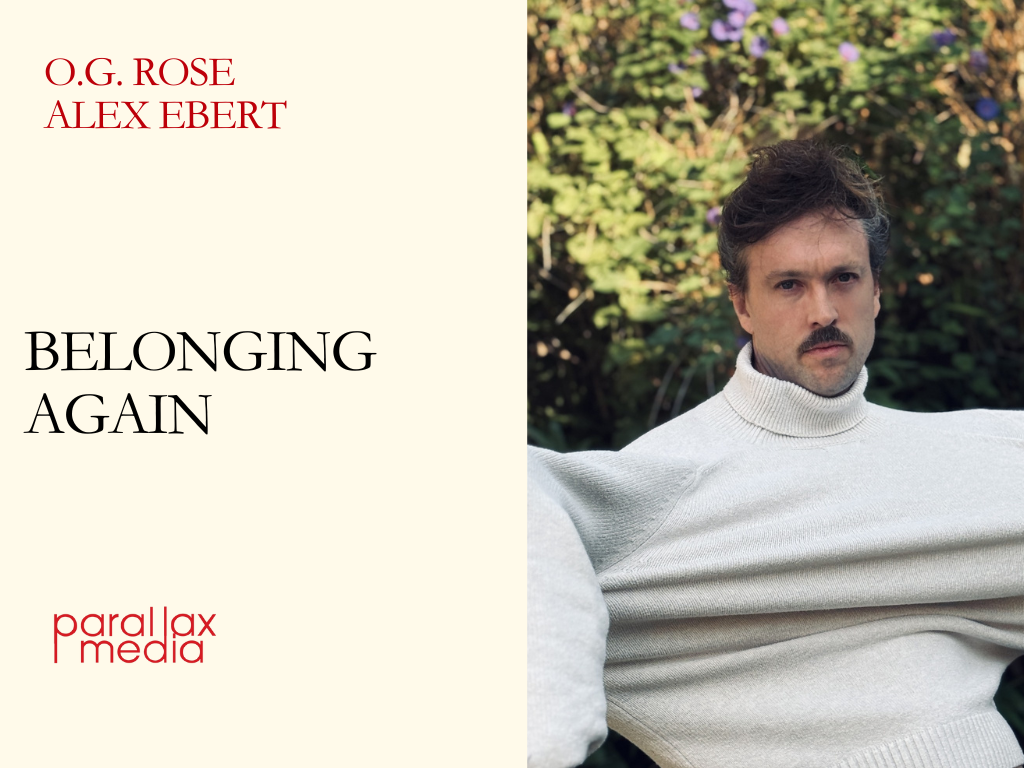
A conversation with Daniel Garner and Special Guest Alex Ebert - Hosted by Andrew Sweeny, about the new O.G.Rose course at Parallax this July and the notion of “Belonging Again.” What should we belong to after all of our ‘givens’ are uprooted or put into question? A two-hour triple expresso conversation of intense philosophical ideation.
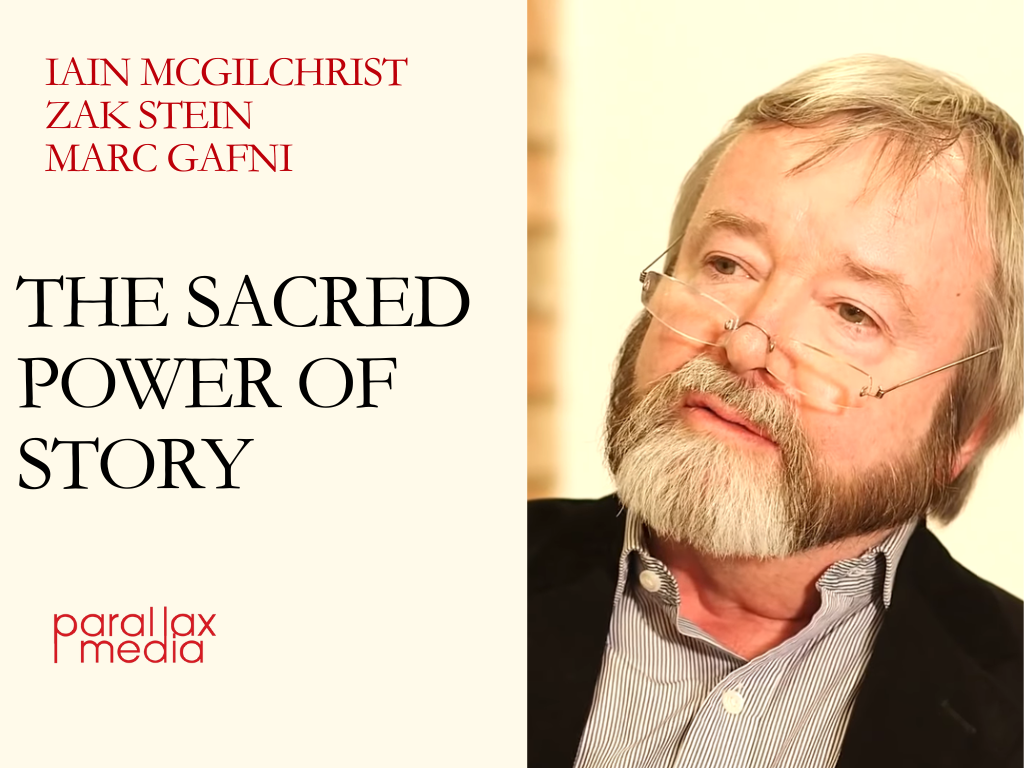
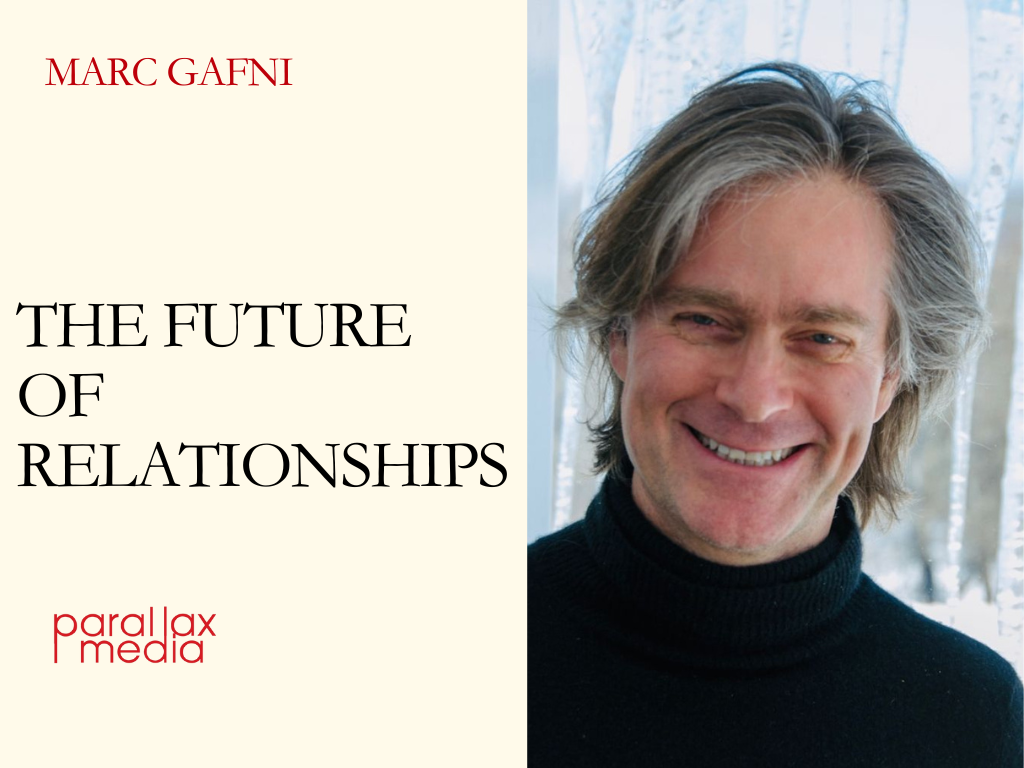
Zak Stein moderates an intense and wide-ranging conversation between Dr. Iain McGilchrist. and Dr. Marc Gafni and The dialogue spans the sacred nature of story, the loss of value and eros, the nature of evil, and the deep structures shaping culture today.
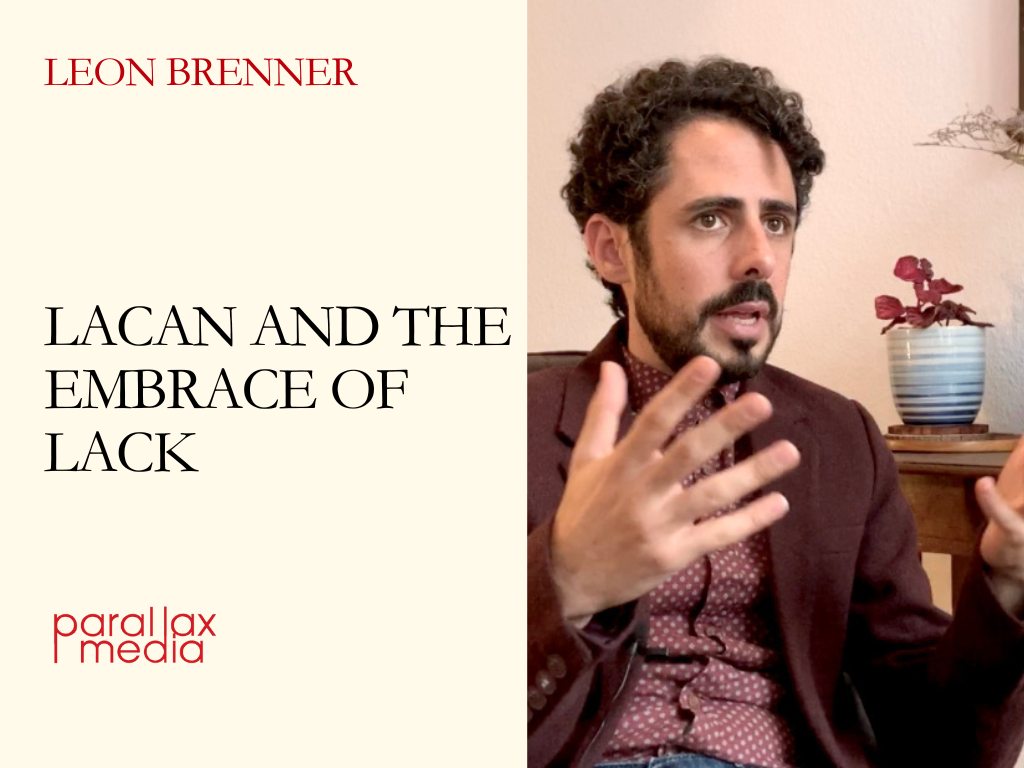
Psychoanalyst Leon Brenner joins the podcast to talk about the Lacan, lack, the lacanian psychoanalysis, and the coherence of the self
This course explores the evolutionary arc of human intimacy through three foundational forms of relationship: Role Mate, Soul Mate, and Whole Mate. Beginning with the ontology of relationship itself, we investigate how roles shape our identities and interactions, not just with others, but with life, the cosmos, and the divine. The Role Mate is often dismissed or undervalued, yet it forms the crucial infrastructure of relational life. Week one sets the ground for understanding this layer of connection, where self and society meet through structure, function, and context.
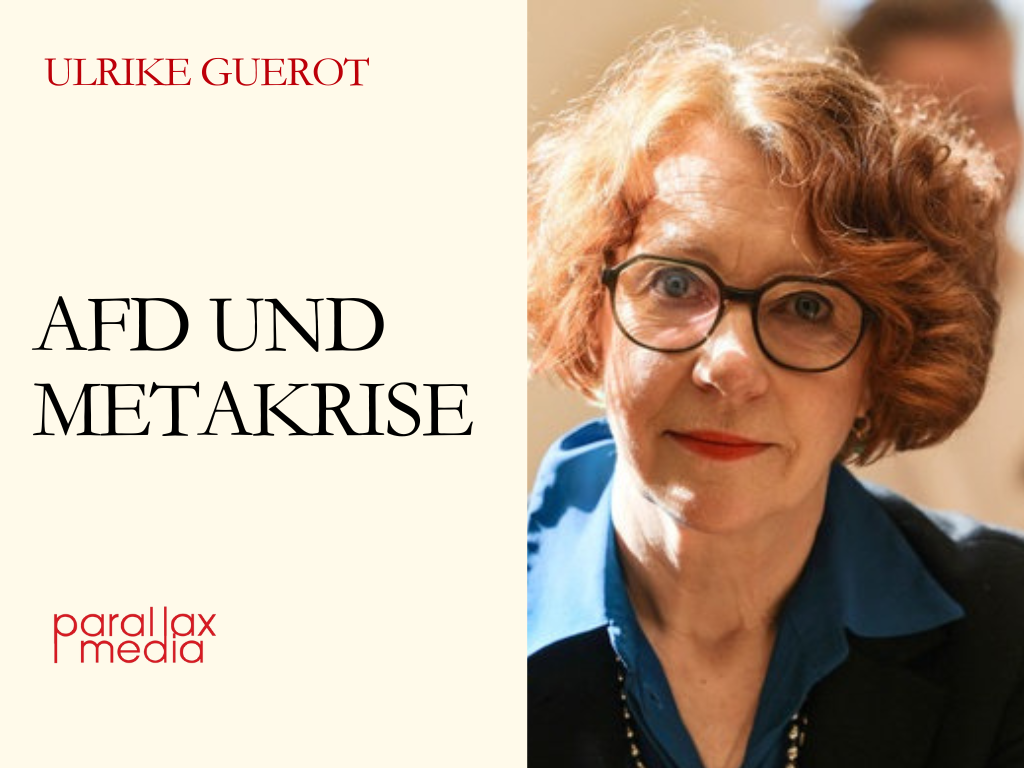
Sind die Proteste gegen die AfD zu exzessiv, um wirklich glaubhaft zu sein - oder liegt in diesem performativen Widerstand genau das Zeichen einer erfolgreichen Abgrenzung und Lehre aus der Vergangenheit?
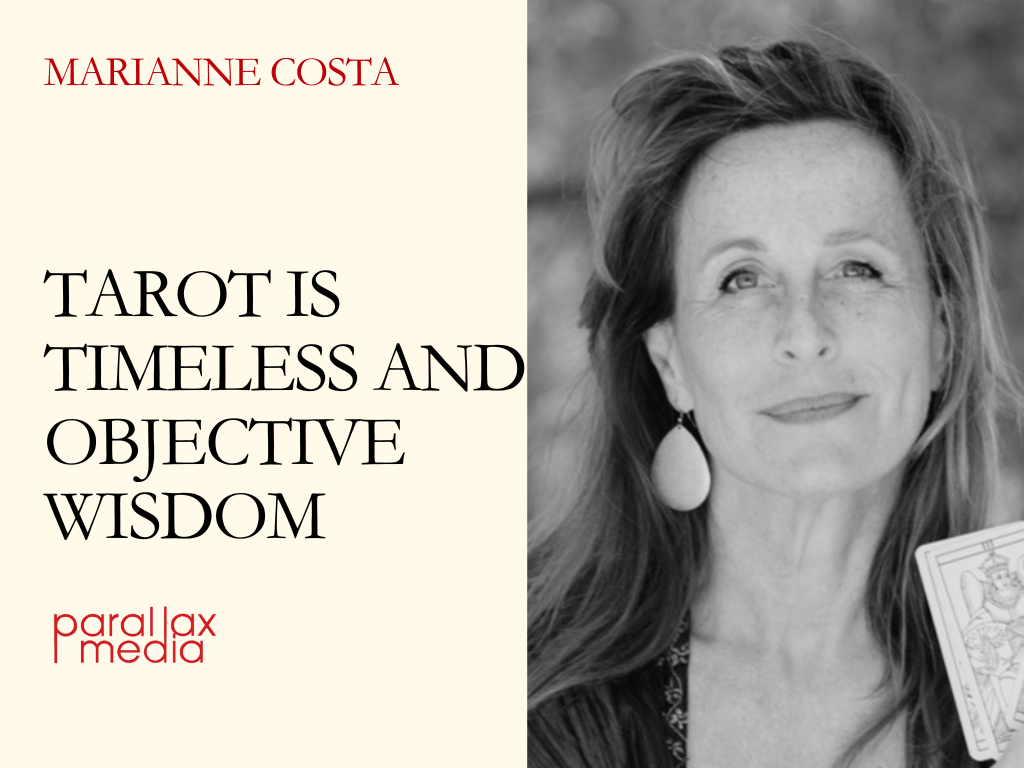
Marianne Costa dives into Tarot with Andrew Sweeny and talks about the upcoming Parallax course: TAROT, THE REAL DEAL: A Journey Through the Major Arcana of the Marseille Deck
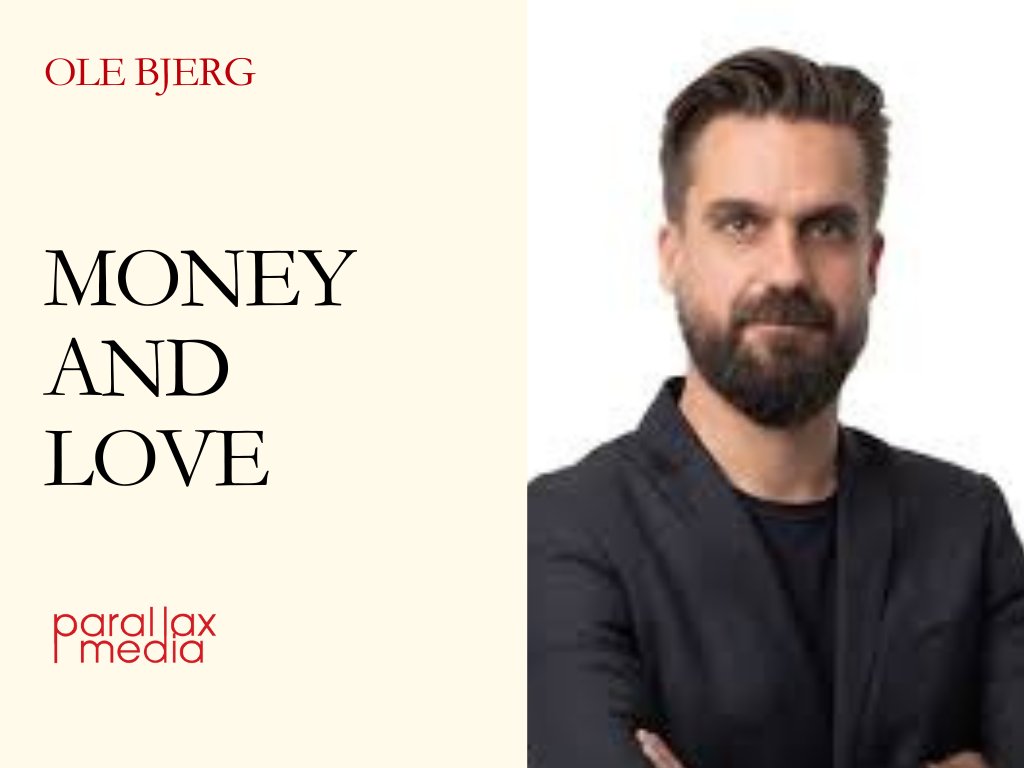
A deep conversation with Dr Ole Bjerg about having a healthy relationship to money and family systems. Hosted by Andrew Sweeny.
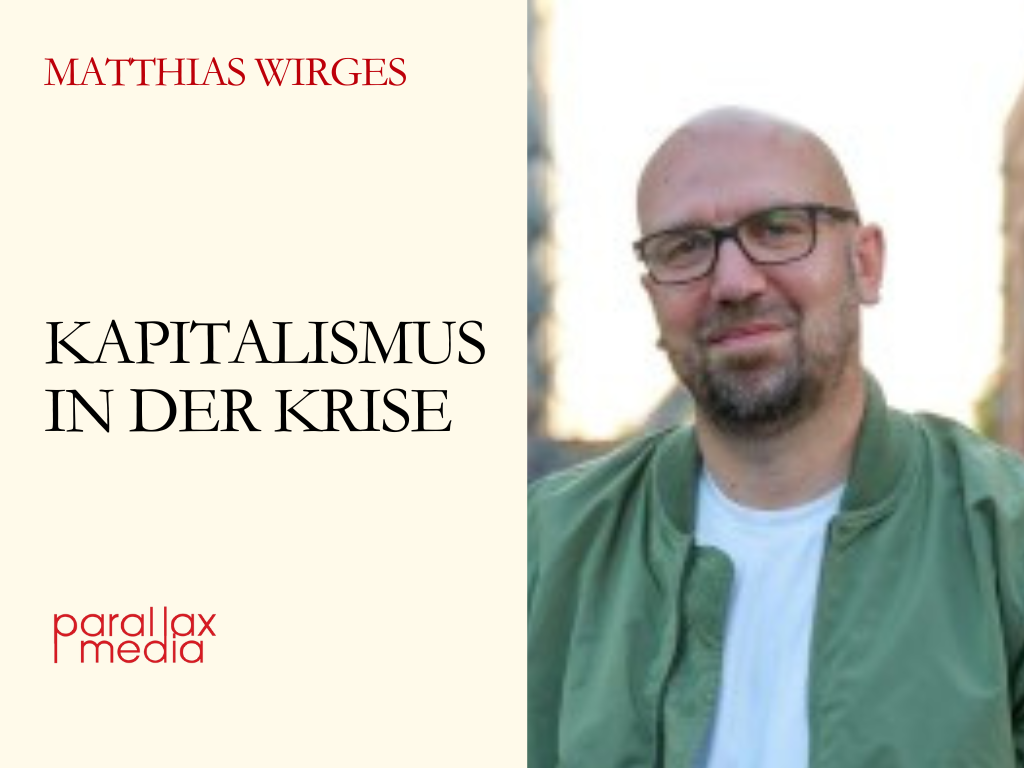
Matthias Wirges ist studierter Betriebswirt, lebt mit seiner Frau und drei Kindern in Hamburg und hat sich als Unternehmer und Gründer mehrerer Startups einen Namen gemacht. Seit über 20 Jahren unterstützt er mit seiner Werbeagentur zahlreiche Topmarken bei ihrer erfolgreichen Vermarktung. Er ist als Host eines Video-Podcasts tätig und bietet dort wertvolle Einblicke in die Entwicklung und Zukunft von Marke und Marketing.
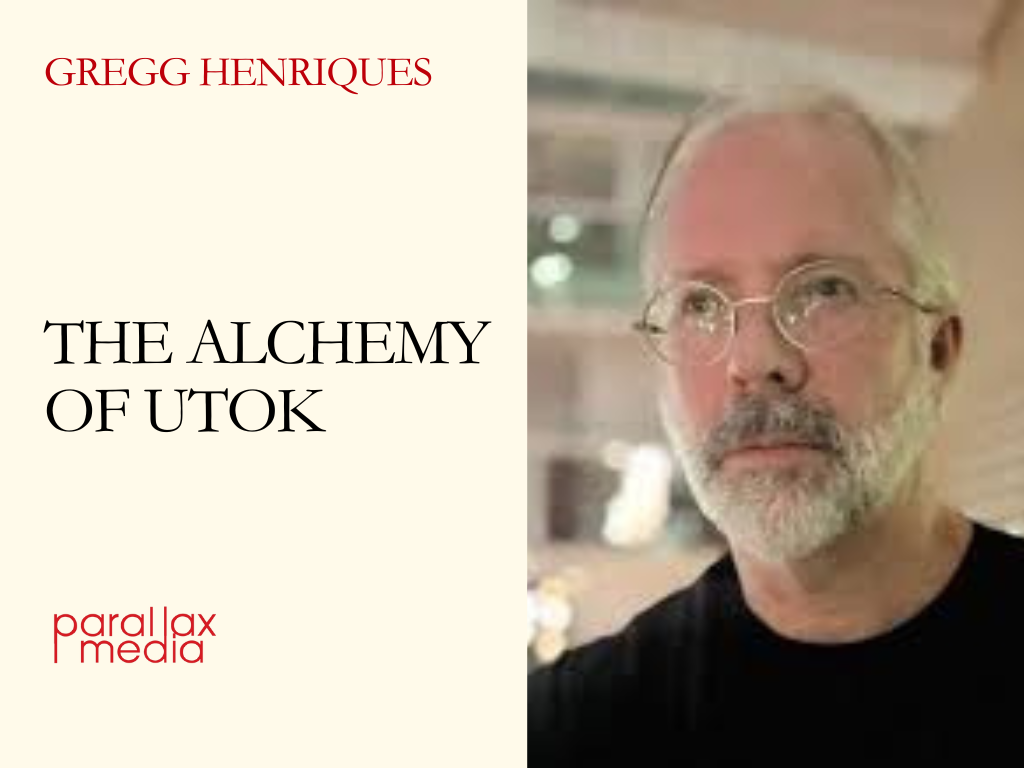
Dr. Henriques joins the Parallax Podcast again to talk about Alchemy, Roger Penrose, political biases and his new book, 'UTOK - The Unified Theory of Knowledge'
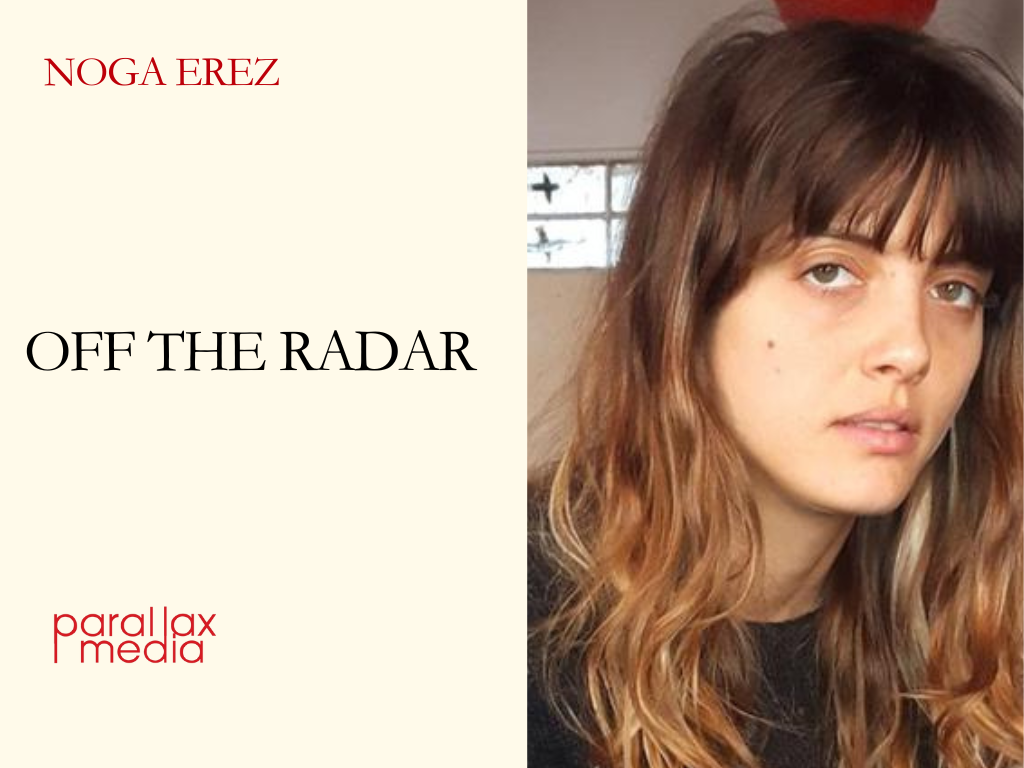
Noga Erez is a singer/songwriter from Tel Aviv/Israel. Her music deals with the conflicts of the world, is uncompromising, fascinating and authentic. Noga and I had an intersting chat about creativity and her debut album 'Off the Radar'
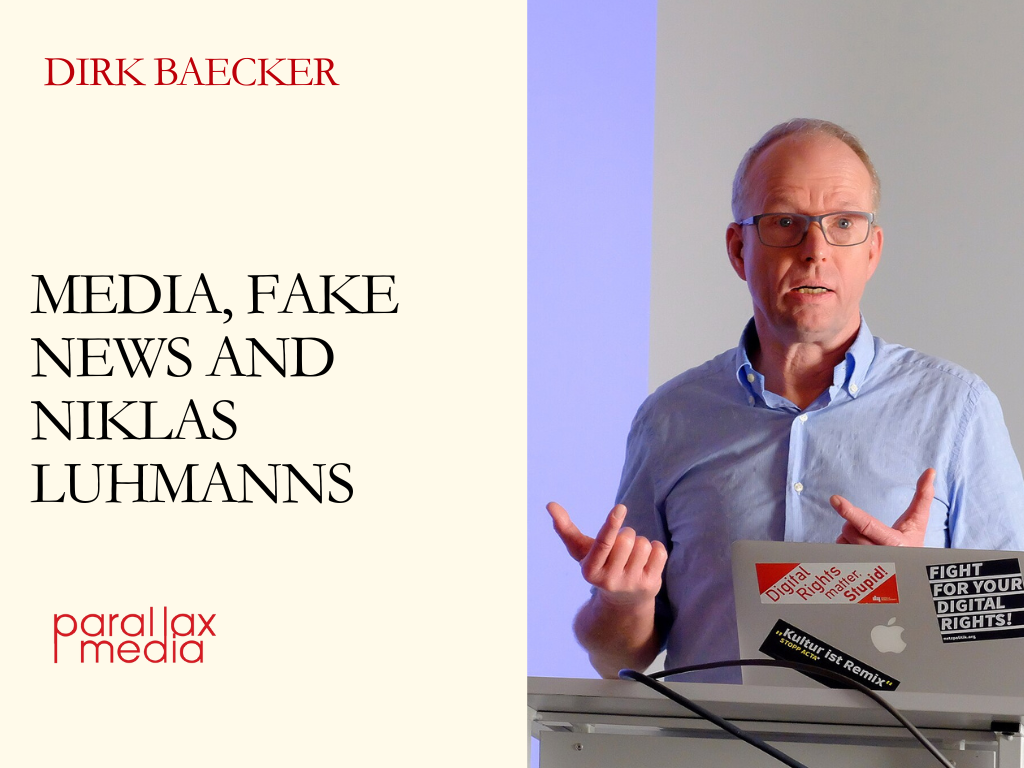
Prof. Dr. Dirk Baecker is a sociologist and holds the chair of Culture Theory and Management at the University of Witten/Herdecke. He studied systems theory with Niklas Luhmann. He has been recognized as one of the most prominent German sociologists with important works on cultural theory, sociological theory, economic sociology and organizational sociology.
In light of the recent Christian revival, what is the place of Christianity in the meta-modern world, and how did Christianity fit into the 4th way of George Gurdjeff.
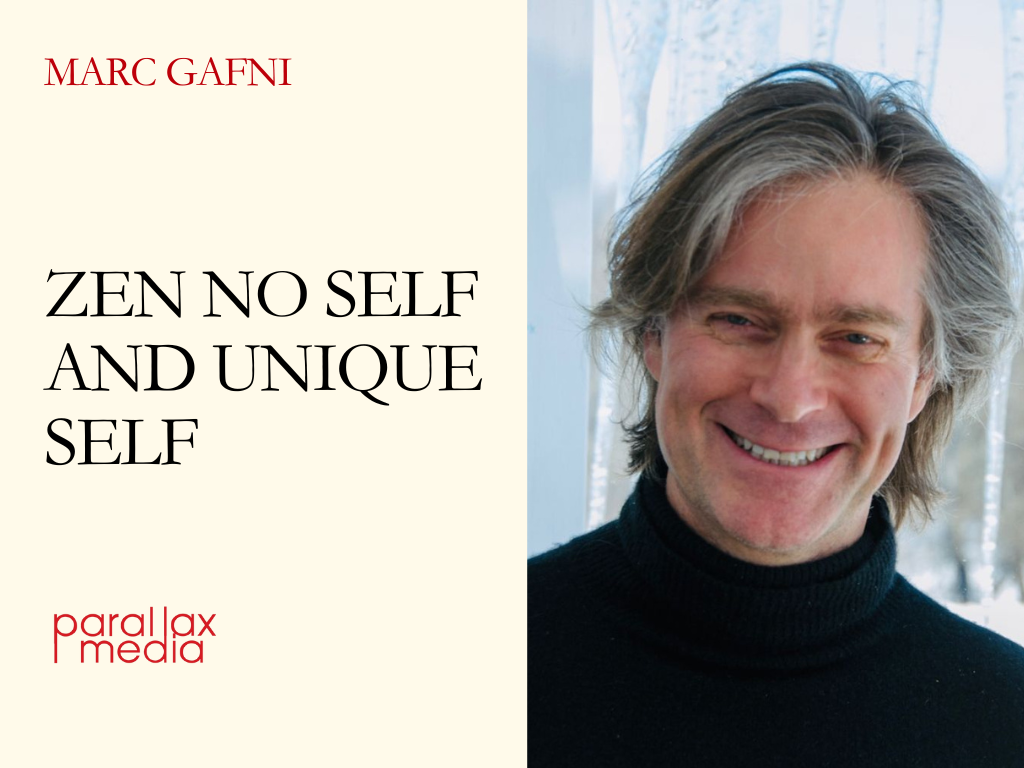
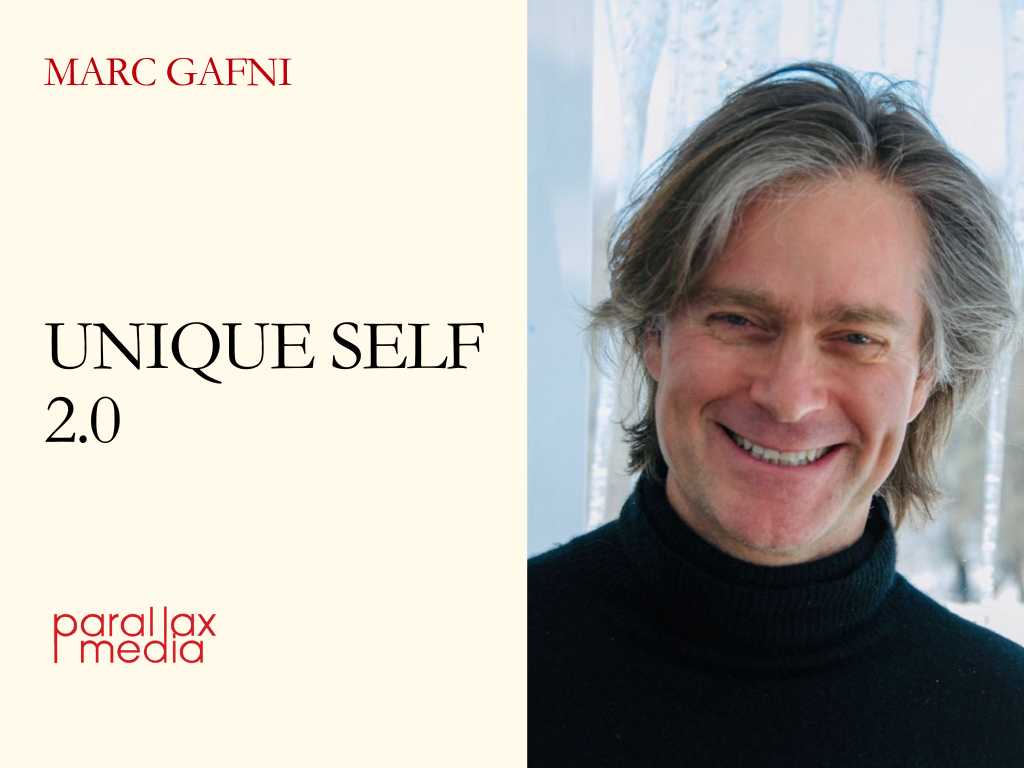
What is Unique? What is Self? What is 2.0? Marc argues that the Enlightenment traditions made the big mistake of denying identity and selfhood. He attempts to rectify this mistake and celebrate human uniqueness as the only way to survive the meta crisis. A great conversation and invitation to Marc's course at Parallax, which begins Sunday, November 24th.
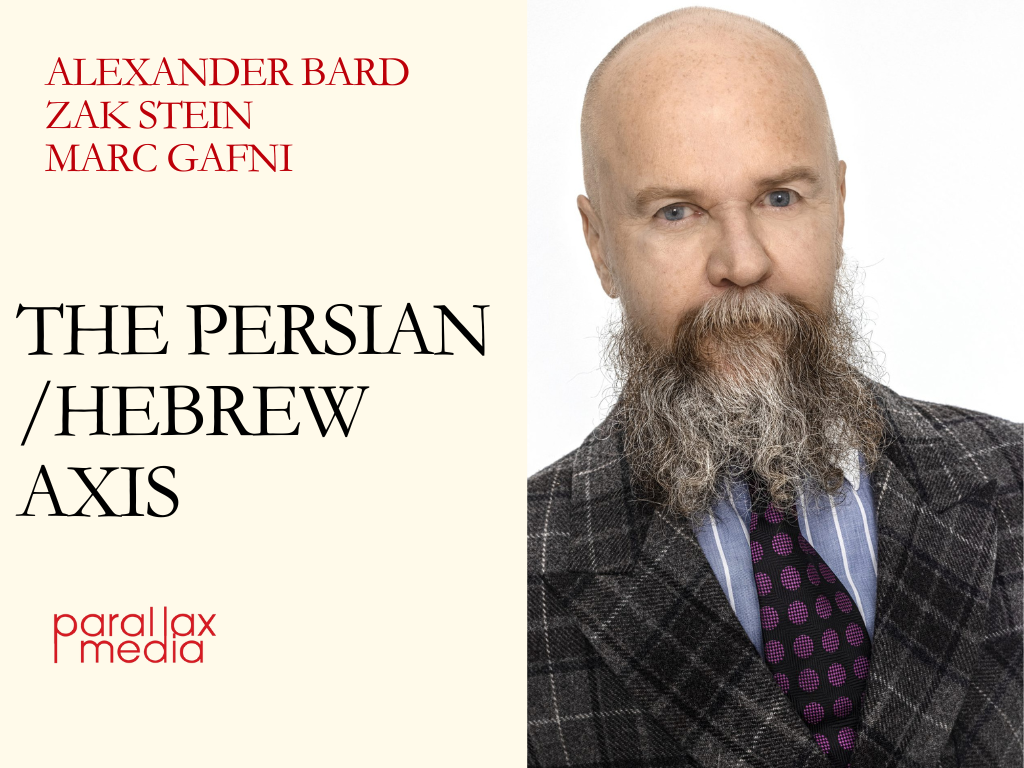
A rich and provocative conversation at the crossroads of philosophy, education, and technology, and a bold defense of religion in the modern age. Three intellectual titans — Alexander Bard, Marc Gafni, and Zak Stein — come together in this deep-dive dialogue, discovering surprising points of unity across their metaphysical differences.
What is Unique? What is Self? What is 2.0? Marc argues that the Enlightenment traditions made the big mistake of denying identity and selfhood. He attempts to rectify this mistake and celebrate human uniqueness as the only way to survive the meta crisis. A great conversation and invitation to Marc's course at Parallax, which begins Sunday, November 24th.
Raven Connolly and Max Borders drop by the Parallax Podcast to talk about their highly anticipated London event, happening September 11th
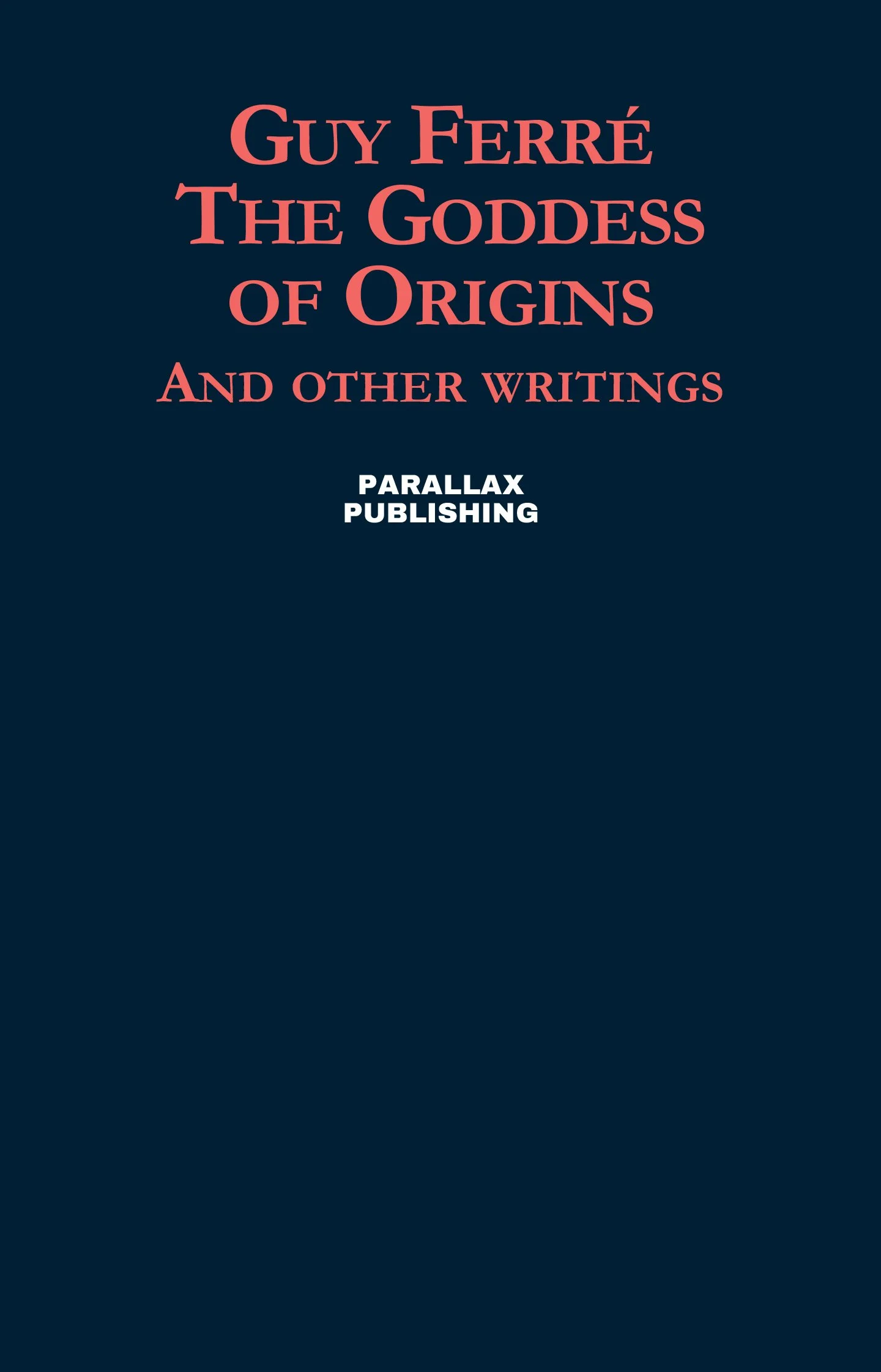
The Goddess of Origins and Other Essays is a collection of four profound spiritual reflections by French physician and spiritual teacher Guy Ferré.
The values which once drove modernization now exhibit clear signs of exhaustion. Throughout modern literature, we find widespread testament to alienation, rootlessness, estrangement, apathy, and resentment.
The Tree of Life is a series of intimate, unscripted dialogues, Dr. Marc Gafni and Andrew Sweeny reawaken the Tree of Life as what it has always been: not a static diagram or mystical abstraction, but ten living reality stories—the deep narrative structures through which Cosmos, culture, and the human soul unfold.
Traces, Light-Prints (volume 1) is a cycle of diptychs and triptychs written over a long stretch of time. More than a volume of collected poems, it’s a relevant bridge established between the author’s earlier and more recent works, a unifying opus and poetic vision patiently honed, brought into focus and driven.
A love story as old as time itself. In The Infinite Now, Tom Amarque traces the eternal cycle of union, loss, and creation.
This book is a lyrical reflection on Dr. John Vervaeke’ massive and influential YouTube series Awakening from the Meaning Crisis. In this volume of essays, YouTuber, poet, and essayist Andrew Sweeny distills the core ideas into poetic, accessible meditations. This is not a summary—it’s a dialogue. A jazz-like engagement.
The subject matter of modern philosophy has gone by various names: the cogito sum, transcendental subject, da sein, or the dividual. However, these descriptions do not merely refer to subject matter for philosophers, but are a description of a “subiectum” which is prior to the world and which accounts for its being.
A meditative companion to Rudolf Steiner’s path of inner development. What does it mean to walk a spiritual path in an age of noise and distraction? Alchemy of Soul is not a commentary but a resonance — a living invitation to deepen the journey of self-initiation described in Rudolf Steiner’s How to Know Higher Worlds.
It is part textbook, part transcription of an online course, & part poetic grimoire. A grimoire is a fancy term for a collection of magical practices and ideas. Do you believe in magic? Does anyone really believe or disbelieve in magic? Maybe it is more about a kind of feeling. A special flavor of attention, energy and embodiment. A collection of interests in symbolism, manifestation, intention, ritual, ancient wisdom and the emancipatory vibe of all things wondrous
Joe Ross’s poetic work, Where Was The Flag B–E–F–O–R–E?, is an intricate meditation on existence, perception, and transformation. It invites the reader into a dynamic interplay between philosophy, spirituality, and cultural reflection, using language as a fluid medium through which meaning constantly re-emerges. The work resists traditional narrative structure, instead embodying a cyclical and recursive rhythm that mirrors the evolving nature of thought and experience.
In this book, Tom Amarque disentangles the concept of will from its historical context and transforms it in a contemporary way with the aim of arriving at a conception that does justice to today's crises and demands.
108 Songs for the Red Goddess is a raw and devotional collection of poems that defy convention, offend modern sensibilities, and challenge the pillar saints' religiosity with their bold, erotic message. Andrew Sweeny’s work is part rebellion, part reverence, and a spontaneous exploration of longing, crisis, and illumination.
A deep and practical study of Gurdjieff’s writings, understood on their own terms, reveals a profound vision. Gurdjieff indicates clearly, and at times staggeringly so, that his "system", commonly referred to as the Fourth Way or the Work, is the continuation of Christ’s original doctrine.
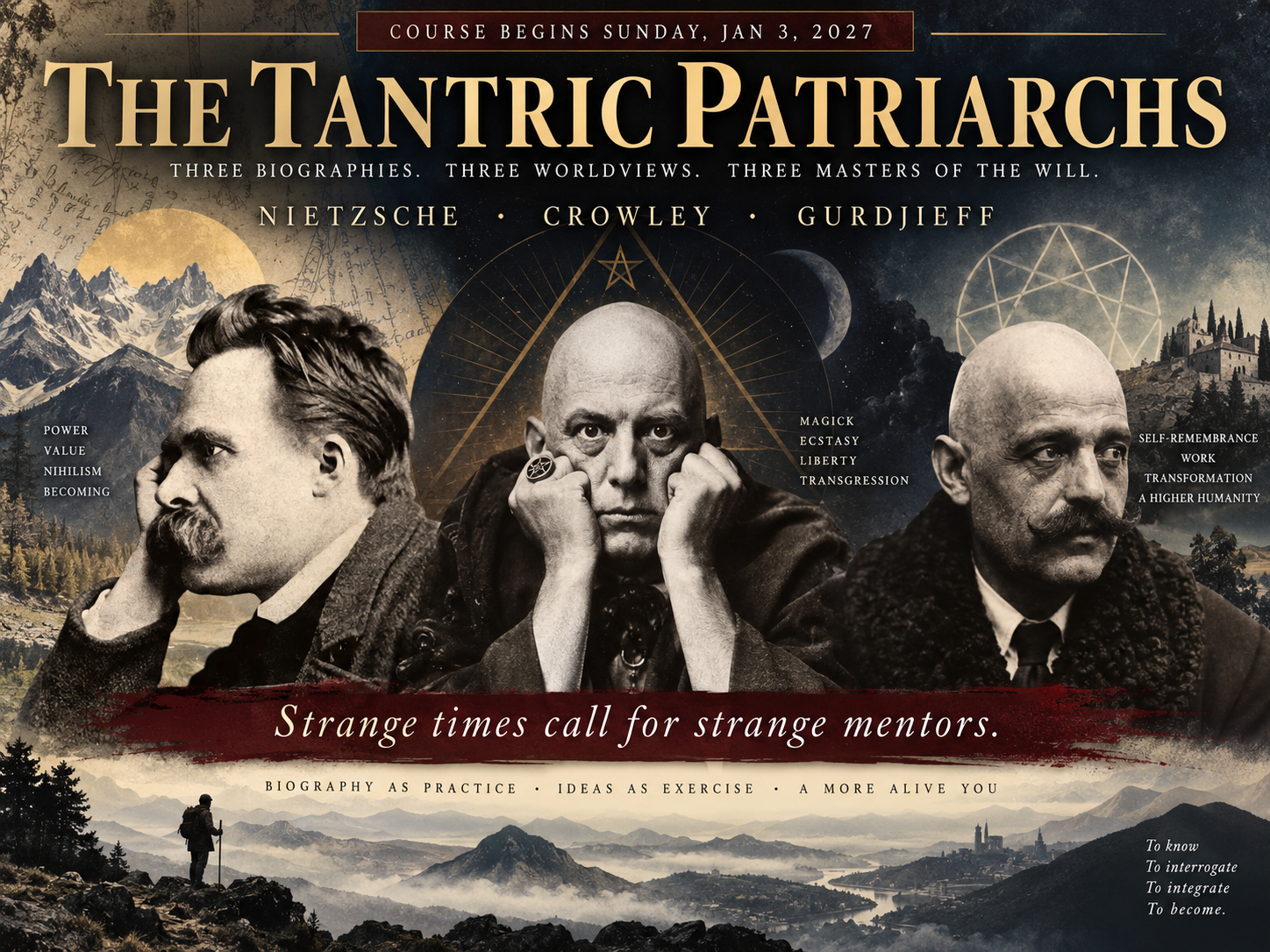
The Tantric Patriarchs series is an invitation into biography as practice. To go beyond merely gaining knowledge about fascinating lives to also assimilate, interrogate & integrate their worldviews. Even to taste the fundamental inner exercises of the men who shaped and disturbed the philosophical soul of the modern era and its still-emerging successors.
by Cordula Frei
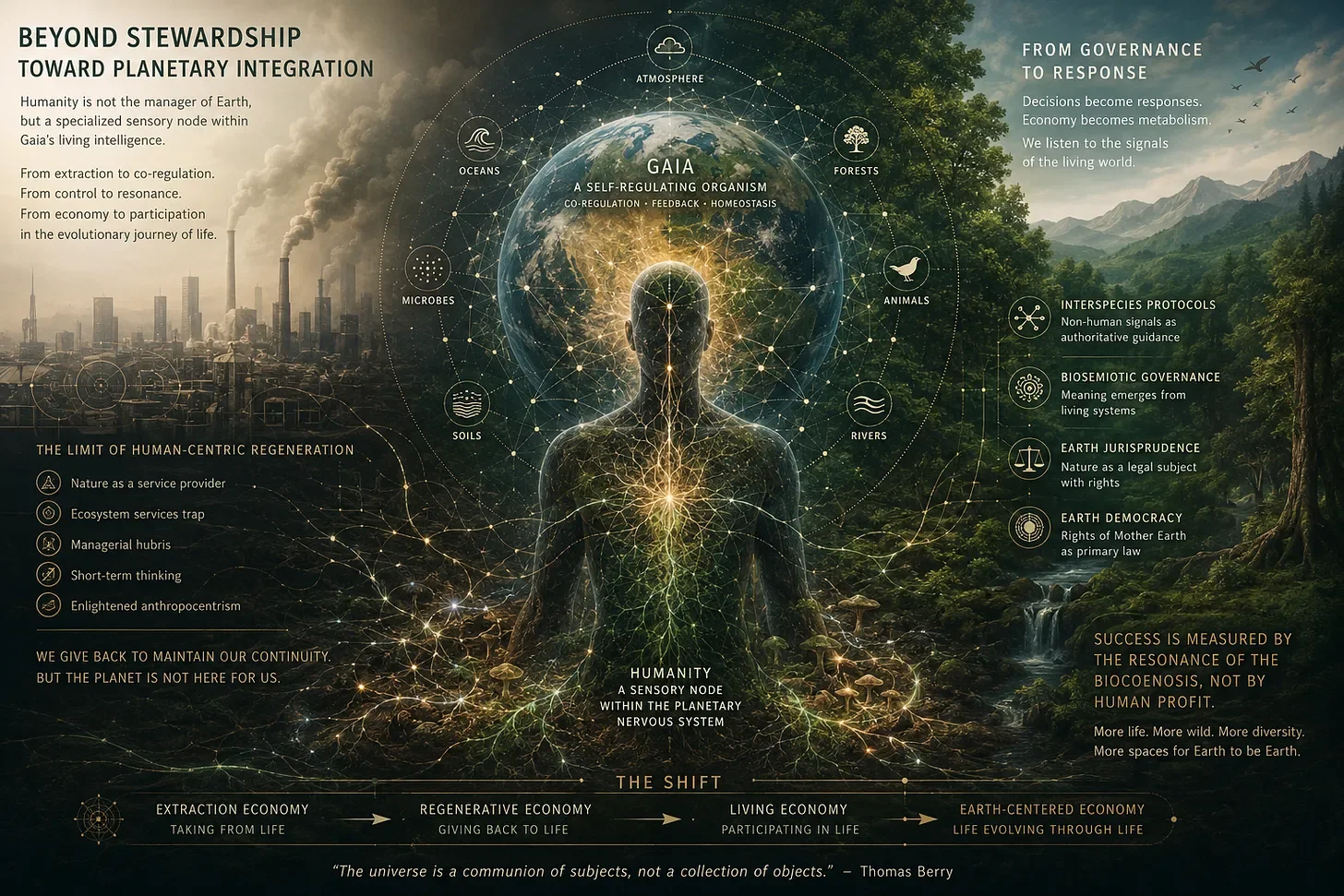
Regeneration, Nervous Systems, and the Limits of Human-Centered Economics
From Stewardship to Planetary Integration: Rethinking Regeneration Beyond Human Centrality : Part 2en a time of Kairos, of massive cultural upheaval and death, it was right then.
by Tom Amarque
When Albert Camus wrote The Stranger in 1942—a work that contributed to his receiving the Nobel Prize in Literature in 1957—World War II was at its zenith. Paris was still occupied by the Germanz. Tens of thousands of soldiers died in Stalingrad that same summer. If there had ever been a time of Kairos, of massive cultural upheaval and death, it was right then.
by Justin Carmien
There is a peculiar moral reflex I often encounter at precisely the moments when something meaningful might occur—a move too-quickly towards reconciliation. What first appears as divergence is soon drawn into a movement of apology or clarification.
by Tom Amarque
In reality, this conflict and the political polarization is better understood as an internal schism within the long secular afterlife of Christianity itself. (Post-)Modern political conflict does not take place outside the Christian moral-metaphysical inheritance but unfolds within it. Even where explicit belief in God has waned, the underlying grammar continues to structure political imagination and affective intensity. The culture war is therefore not post-Christian; it is a theological civil war conducted with secular concepts and alien-like technology.
by Justin Carmien
Thirty-five years ago, a conflict raged between religion and science. The public display was especially pronounced in conversations surrounding figures such as Richard Dawkins, Daniel Dennett, Sam Harris, and Christopher Hitchens.
by Justin Carmien
I fear that something adult has quietly gone missing from my social experience. I’m not so much worried about a loss of discipline among my friends and colleagues—certainly not authority, nor responsibility—but about something which precludes such virtues and makes them possible.
by Justin Carmien
There is a particular jingle which still hums through grocery stores and banks, a faint residue of another world. “Everybody wants to be closer to free.”
by Justin Carmien
Five Easy Pieces tells the story of a man drifting between the worlds he inhabits. Jack Nicholson’s character, Bobby Dupea, is caught between expectations, family, and his own sense of self—a narrative of dislocation and rootlessness.
by Tom Amarque
My most recent article, “The Art of Willing,” proved interesting largely because of the feedback it generated. In retrospect, it became obvious that I had failed to answer the most fundamental question of all—namely: What is will? I realized that much of the criticism stemmed from this omission. I had committed one of philosophy’s cardinal sins: assuming that everyone uses a given term in the same way I do. So let’s rectify this.
by Tom Amarque
It is an interesting fact that will, one of the most basic features of human psychological existence, plays only a minuscule role in contemporary psychology—if it plays any role at all. This is puzzling, because will—understood as a pattern of behaviors oriented toward particular goals—seems to encompass much of what we do in our everyday lives.
by Tom Amarque
Maybe we don’t enter the world at birth. Maybe our life really begins by brushing against surfaces—leaving the amniotic sac of primordial fusion with the mother-womb behind and becoming surfaces ourselves, exposed to other surfaces. Skin onto skin. Our face and lips search for the breast; so much so that this sack of tissue and fat leaves such a deep imprint that it continues to exert its fascination even in the final stages of our life.
by Justin Carmien
Indeed, our capacity to empathize is not infinite. Today, images and reports of suffering in the news and on social media fuel an economy of attention.
Tom Amarque
Call me biased. I am German, and I grew up in the nineties. The world was easy back then.
Von Matthias Thiele
Die Maschine reagiert nicht strafend auf das Unnütze, sie reagiert lediglich mit den Mechanismen ihres Selbsterhalts. Was nicht empfindlich stört, wird von ihr ignoriert. Was in ihr keine Funktion erfüllt, verblasst allmählich.
by Tom Amarque
There is an aphorism by the incomparable Nassim Nicholas Taleb, reminiscent of the wisdom of Don Vito Corleone, that goes like this: Don’t threaten when you are angry.
by Tom Amarque
There is a specific perspectival madness when it comes to psyche and consciousness. As recently as 2024 Kuhn listed more than 500 theories of consciousness, all converging, conflicting and contradicting each other, from the resonable to the more absurd. Like when famous physicist Roger Penrose mused that consciousness emerges when the wave-function breaks down. Which is just a fancy new wording for the ancient belief that Shiva himself created the universe.
von Renée DiResta
Es gibt einen Krieg. Wir sind mitten in einem sich entwickelnden, anhaltenden Konflikt: einem Informationsweltkrieg, in dem staatliche Akteure, Terroristen und ideologische Extremisten die soziale Infrastruktur des Alltags nutzen, um Zwietracht zu stiften und die gemeinsame Realität zu untergraben.
von Sean Esbjörn-Hargens
Die zunehmende Einsicht in die Komplexität ökologischer Probleme hat Führungskräfte in Umweltorganisationen, Regierungen, Unternehmensbüros und Universitäten dazu bewegt, vermehrt nach interdisziplinären, multidisziplinären und sogar transdisziplinären Modellen zu suchen, um die Umweltprobleme zu lösen.
by Daniel Christian Wahl
Sustainability alone is not an adequate goal. The word sustainability itself is inadequate, as it does not tell us what we are actually trying to sustain. In 2005, after spending two years working on my doctoral thesis on design for sustainability, I began to realize that what we are actually trying to sustain is the underlying pattern of health, resilience and adaptability that maintain this planet in a condition where life as a whole can flourish. Design for sustainability is, ultimately, design for human and planetary health .
Von Lene Rachel Andersen & Tomas Björkman
Wie bemerkenswert sind die skandinavischen Länder? Sind sie wirklich so bemerkenswert? Sind wir nur selbstdarstellerische „Nordländer”, die nur im Auftrag unserer nationalen Tourismusabteilungen handeln, oder gibt es etwas Wichtiges in Island, Dänemark, Norwegen, Schweden und Finnland, das es wert ist, untersucht zu werden?
von Raoul Eshelman
Wir leben unbestreitbar in einer Zeit des kritischen Skeptizismus, in der Glaube meist nur noch als Zitat am Rand der Kultur eine Rolle spielt – beispielsweise bei gelegentlichen biblischen oder religiösen Anspielungen in ansonsten weltlichen Filmen, Gemälden oder Büchern. Die eindeutig säkularisierte Ausrichtung unserer Gesellschaft hat scheinbar endgültig dafür gesorgt, dass das Erlebnis des Glaubens aus unserem kulturellen Erfahrungsbereich verschwunden ist.
Von Tomas Björkman
Ich glaube, dass die Menschheit und die Welt, in der wir leben, einen kritischen Punkt in unserer Geschichte erreicht haben. Das alte Sprichwort, dass nichts so beständig ist wie der Wandel selbst, schien nie eine genauere Widerspiegelung unserer Realität zu sein als heute.
von David Korten
Wir Menschen, so Kortens These, leben mit und durch Geschichten, und die Geschichten, die wir uns derzeit erzählen, führen uns in eine desaströse Zukunft, geprägt durch Klimawandel, Armut, ungleiche Einkommensverteilung, soziale Ungerechtigkeiten und kollektive Selbstzerstörung. In seinen Buch – einem Bericht an den Club of Rome – untersucht Korten diese Geschichten, nach denen wir leben, unterscheidet vier grundlegende Kosmologien, auf denen diese Geschichten basieren, und zeigt auf, was wir tun müssen, um zu einer tragfähigen und wahrhaft demokratischen menschlichen Zukunft zu kommen.
By Max Borders
Inanna, the Sumerian goddess of love and beauty, descended into the Underworld to confront her sister, Ereshkigal, the queen of death and darkness. As she traveled through each gate of the Underworld, Inanna was forced to remove a piece of her royal attire. After passing through each gate, she stood naked and vulnerable before her sister. Stripped of all illusions and symbols of power, she was reborn.
by Lene Rachel Andersen
Denmark frequently pops up in American politics as an example worth emulating: democratic, prosperous, peaceful, well organized, and with a successful single-payer health care system. Some, like Fox News, seem to think, though, that Denmark is socialistic and resembles Venezuela; they should travel more — or, given COVID-19, call somebody at the US State Department who actually knows Denmark.
von Nassim Nicholas Taleb
Was wir weltweit, von Indien über Großbritannien bis hin zu den USA, gesehen haben, ist die Rebellion gegen den inneren Kreis der "Sachbearbeiter" und Journalisten-Insider, die keine Haut im Spiel haben, diese Klasse paternalistischer halb-intellektueller Experten mit irgendeiner Ivy League, Oxford-Cambridge oder einer ähnlichen label-gesteuerten Ausbildung, die dem Rest von uns sagen, 1) was wir tun sollen, 2) was wir essen sollen, 3) wie wir sprechen sollen, 4) wie wir denken sollen... und 5) wen wir wählen sollen.
by Dennis Wittrock
Like many of my peers, I am constantly wrestling with the question: What does it take to steer the world into a saner, more sustainable direction? This text is not a definitive answer to that question, simply a summary of what puzzle-pieces I have found so far that seem relevant. I will release it in the form of a series of posts. My hope is that by putting my pieces on the table that others will pick them up and link them to theirs so that this act of distributed cognition can move the whole forward.
Von Dominik Irtenkauf
Die politische Landschaft bewegt sich derzeit in eine gefährliche Richtung. Das hängt nicht nur mit Corona zusammen. Das Erstarken (rechts-)populistischer Bewegungen, der zunehmende Verlust einer eigenen kritischen Mitte und die Indifferenz gegenüber dem ökologischen Kollaps unseres Planeten führen zu einer Rückwärtsbewegung. Dies beinhaltet eine Rückkehr zu überwunden geglaubten Haltungen und Verhaltensweisen.
This five-part course invites students to embark on a journey of philosophical mythmaking as they explore how to reclaim time from linear progress, ‘see through’ the complex conditions of the present, and trace the outlines of an ‘integral’ spirituality–a spirituality that uniquely meets the challenges of this strange time between worlds..
Integral Theory for Idiots is for all three types. Layman Pascal will put you all in a blender together -- framing the discussion as part of the general field of developmental metatheories, liminal culture & adaptation to the new bio-informational planetary situation. This carnivalesque educational and participatory journey will be part (lively) introduction, part (dancing) critique, and part (enthusiastic) appreciation.
Following our introductory course on the Minor Arcana, we now move into what can be called the Integral Tarot: working with the entire Tarot de Marseille as a coherent system, rather than as a set of disconnected parts.
Many of us sense that something within the current discourse around regeneration, sustainability, and “system change” remains incomplete.
We knew how to write correct sentences, but fiction doesn’t live or die by correctness. No matter what we did, we couldn’t figure it out. Then, years later, we discovered Robert Butler, who taught us how to write a story. It turned out that we didn’t know what sentences in fiction were for. Most writers never learn this explicitly, but once we saw it, we couldn’t unsee it.
In this seminar, we will explore the meaning of the Minor Arcana, as well as strategies to make them our best companions for continuous learning—a veritable journey into the depths of our psyche, practical sense, intelligence, creativity, and intrinsic wisdom.
The profound value of the Marseille Tarot lies in its objective and humble nature: an immaterial architecture that summarizes the concrete, psychological, and spiritual structure of the human being, a point of encounter between our existential struggles and the laws of the Cosmos.
Zufism – Toward the Origin and Source of Philosophy, Religion, and Spirituality is a course that lays the groundwork for Alexander Bard’s forthcoming book on Zufism. It combines Bard’s philosophical insights with key spiritual traditions such as Zoroastrianism, Zen, and Eastern traditions like Taoism and Vajrayana along the Silk Road. Drawing from his intellectual influences, including Hegel, Nietzsche, and Deleuze, Bard’s philosophy delves into the evolving relationship between philosophy, religion, and technology.
Finding and Living your Truth as a Woman in Business
Starting 21.2.2025 at Parallax Academia hosted by Simone Junod, Shaman
In this course, Gafni and Stein deepen the themes raised in First Principles and First Values. The Eye of Value is contrasted with the Eye-of-Anti-Value, and the topics of anthro-ontology, story, and value are explored in depth. Marc and Zak will engage participants in a series of dialogues at the edges of human knowledge, where there is a dance between the languages of science and the sacred, and between the lineages of ancient wisdom and our living memory of the future.
In this three-week journey, participants confront the wounds that shape their lives—the unique ruptures that call us from despair into wonder, from alienation into intimacy, from devastation into divinity.
Starts November 1th 2025 - This course explores why Christ provokes the most visceral energetic reaction in history—and why, two thousand years on, His power still divides kingdoms, unmasks hearts, and calls forth a new humanity. Prepare to be turned upside down
Starts november 13th 2025 - a deep exploration of feminine and masculine leadership in the digital age with Fanny Norlin.
The core inquiry of this three-week immersion is the nature of wounding and the precise stations of consciousness through which wound, desire, power, intimacy, and love unfold
This course serves as the third step in the larger long-term journey into the evolving landscape of your unique self, offering practices, insights, and community support to help you live your unique self in a deeper, more connected way.
This course serves as the third step in the larger long-term journey into the evolving landscape of your unique self, offering practices, insights, and community support to help you live your unique self in a deeper, more connected way.
This course serves as the second step in the larger long-term journey into the evolving landscape of your unique self, offering practices, insights, and community support to help you live your unique self in a deeper, more connected way.
Portal 1: This course serves as the first step in the larger long-term journey into the evolving landscape of your unique self, offering practices, insights, and community support to help you live your unique self in a deeper, more connected way
This transformative five-part course is designed for those ready to construct a powerful memeplex: an Empire of the Mind. In a world where personal stagnation can be dangerous, we will learn to shed old skin, gather our strength, and rise against the forces of manipulation and control. More than a course, this symposium is rooted in a powerful vision of social self-organization, along with the doctrine and practices that can realize it.
What is the occult? And how can a deeper understanding of its theory and practices help us to grow in power and wisdom? Individually we need to become more complex (and simpler), wealthier in every sense, and infused with a greater force of intention in all aspects of our lives. Collectively, we need to enhance the well-being of those we love and also spread new ideas, patterns, and moods into a planetary civilization that is wavering between implosion and transformation. Real growth requires more than just aspiration and meditation. We must contact, unfold and empower hidden parts of ourselves. We need to get better at “magic.”
Many portray Gurdjieff as a mere syncretic teacher of Eastern traditions or the more fashionable "Silk Road'' mystic who cobbled together ideas and practices for his system of the “Fourth Way”. However, this superficial understanding belies his history and teachings that tell a very different story and reveals a far more profound and challenging reality. This introductory session will delve into Gurdjieff's faith and work, and his controversial views on religion, and modern Christianity in particular, setting the stage for a deeper exploration.
Part I of Belonging Again attempted to explain our circumstance through thinkers like Peter Berger, Philip Rieff, and James Hunter. Part II will work to address our circumstance, arguing what it would mean to think economics, politics, sociology, and the like in light of the arguments of Belonging Again. In this, our aim is to show that in “The Meaning Crisis” there can be reason to hope.
In this six-part seminar cyber-philosopher Alexander Bard will delve into his Magnum Opus, Process and Event
Today, technology allows us a new form of design: one that designs subjects, not objects; people, not things. By designing the information someone consumes, we can frame their opinions. By designing the interactions they have with digital devices, we can frame their thinking. This is known by not only tech giants but by military intelligence. And now, it is time that it becomes known by designers - especially those at the vanguard of dying paradigms
Zak Stein is a philosopher of education working at the interface of psychology, metaphysics, and politics. He has published two books, including Education in Time Between Worlds, along with dozens of articles.
This is the second in a three part series of conversations based on The book Sex, Masculinity and God co-written by Cadell Last.
The Nation-State System – why it acts as a block to our further evolution and how we can transcend it.
The SIMPOL Solution, spearheaded by the Simultaneous Policy (SIMPOL) Organization, gives voters around the world a new way to pressure their leaders to address global problems ranging from climate change to mass immigration and gross income disparities.
The talk will unpack the title itself: what is the structure of feeling in our time and how does it relate to a shifting *consciousness of time*, itself? What does a new relationship with time do for enabling us to actualize new futures? How does this moment make sense in the context of the whole (process) of cultural evolution in which we are situated?
A history of the good, the bad, and the ugly of the Men's movement with Fr. Michael Butler and a Q&A about Men's issues in general.
Cadell Last is an anthropologist, philosopher and therapist focused on biocultural evolution, mind-matter relation and future speculations. He earned his PhD in interdisciplinary and complexity studies at the Evolution, Cognition and Complexity group at the Vrije Universiteit Brussel. He is also the author of over a dozen academic publications and two books: Global Brain Singularity and Sex, Masculinity, God. You can find more about his work at cadelllast.com."
Ole Bjerg (b. 1974) is an Associate Professor in Philosophy and Economics at the Copenhagen Business School. His writings span a range of topics such as money, banking, central bank digital currency, bitcoin, sustainability, conspiracy theory, poker, addiction, ethics, and now also men. A list of previous books in English include Parallax of Growth (Polity Press 2016), Making Money (Verso 2014) and Poker: The Parody of Capitalism (University of Michigan Press 2011). He was born in Jutland but now lives in Copenhagen with his wife and two sons.
The Philosopher Queens began as a manifesto written by Rachel Haywire. The manifesto expresses discontent at the impoverishment of feminine archetypes in the popular discourse, and prophesies the rise of the femme fatales who will take their place as Philosopher Queens.
Performatism is an epochal concept of post-postmodernism. I proposed it in 2000, first in a German-language article in the Wiener Slawistischer Almanach, then in an English translation in Anthropoetics. A book version, Performatism, or the End of Postmodernism, appeared in 2008. You can also find a brief practical introduction to interpreting performatist narrative in Blog Post No. 3, "The Performatist Challenge" as well as exemplary analyses in the Interpretations section.
Metamodern philosophy enters the scene only once the Internet and the social media have become truly dominant factors in people’s lives and when many of us no longer partake directly in the production and distribution of industrial goods.
Global growth sets new records, poverty and illiteracy rates fall, technological innovation creates amazing opportunities. Still we are deeply discontent, there is something fundamentally wrong with contemporary society. Democracies are paralysed and produce authoritarian bullies as leaders, a growing underclass sedates itself with fast carbs and moronic entertainment. Society is infantilised and political discourse implodes. Why?
Global growth sets new records, poverty and illiteracy rates fall, technological innovation creates amazing opportunities. Still we are deeply discontent, there is something fundamentally wrong with contemporary society. Democracies are paralysed and produce authoritarian bullies as leaders, a growing underclass sedates itself with fast carbs and moronic entertainment. Society is infantilised and political discourse implodes. Why?
How does the ancient shaman archetype relate to our present digital age? What is a shamanoid personality type and how to be a shaman in the digital age? In this talk, based on a conference I gave at the European Men’s Group gathering in Denmark in 2019, I will discuss these and questions with reference to the famous pill scene in the first Matrix movie.

































![Value is Real: Why Saying This Clearly May Save Civilization [and our Souls] - (with Marc Gafni and Zak Stein)](https://images.squarespace-cdn.com/content/v1/5cf273037b405a0001103c6e/1729501344580-GPV8U13N8ZWTKKBHW3VD/Template+Squarespace+webpag+zak.png)



















The Goddess of Origins and Other Essays is a collection of four profound spiritual reflections by French physician and spiritual teacher Guy Ferré.