
The Art of Willing
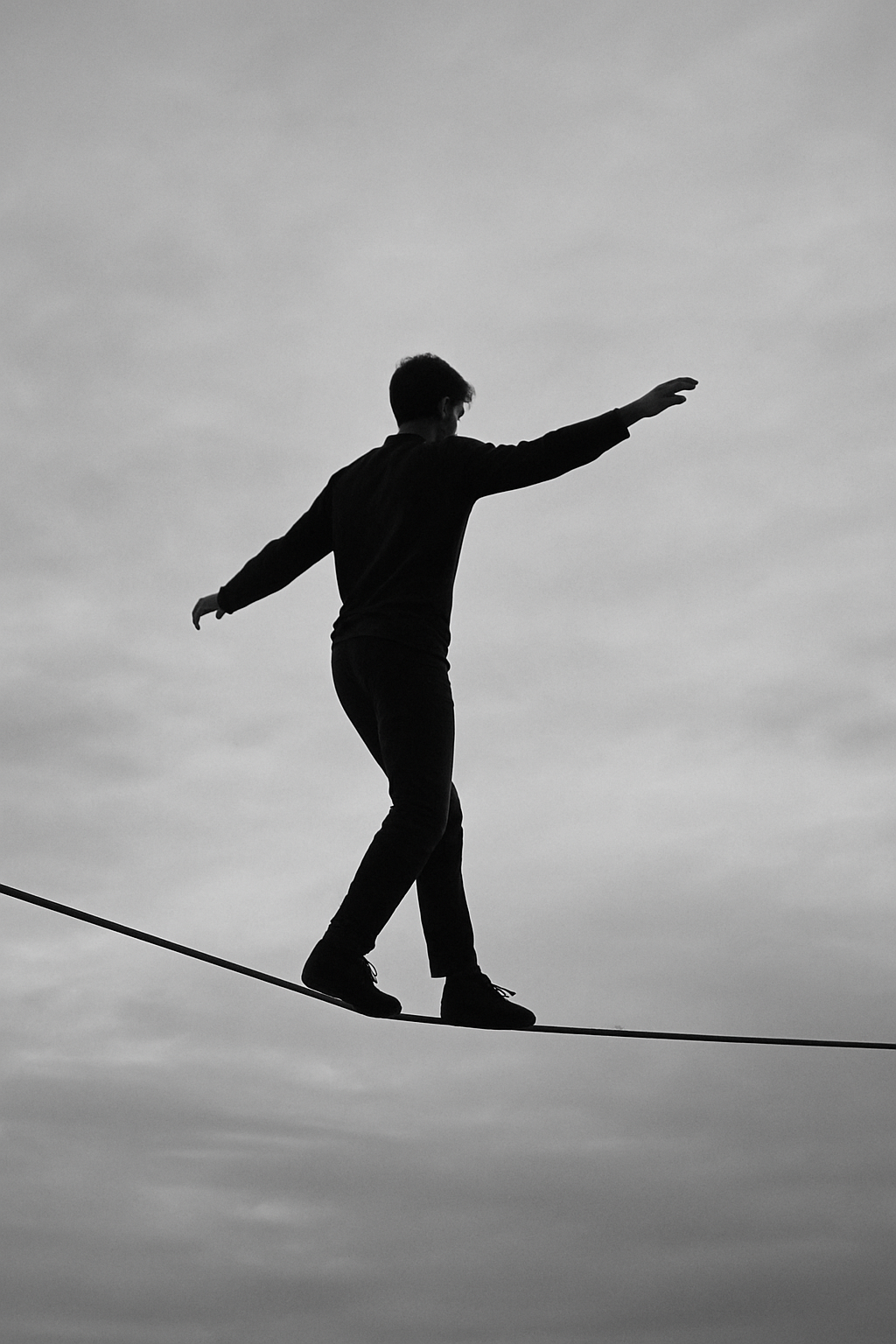
By Tom Amarque
It is an interesting fact that will, one of the most basic features of human psychological existence, plays only a minuscule role in contemporary psychology—if it plays any role at all. This is puzzling, because will—understood as a pattern of behaviors oriented toward particular goals—seems to encompass much of what we do in our everyday lives.
We constantly wrestle with alignment in order to do what we want: alignment with ourselves, with the world, and, most importantly, with those parts of ourselves that remain unconscious yet speak to us—through failure—from beyond the threshold. We orient ourselves in the world through wanting, and even more so when we fail to achieve or attain what we want. This failure, this persistent tension between wanting and not succeeding, appears to constitute a large portion of our lived experience.
Perhaps psychology, in its effort to decipher the origins of this wanting—the “desire machine,” the breakdowns of self-alignment and self-efficacy, the often unconscious factors that enable us to fail—is, in reality and in its deep structure, already the study of the will.
Be that as it may, philosophically speaking, will continues to exert a powerful fascination—perhaps more so than ever. For will is many things. It contains a telos: a striving toward a somewhat better future of self and world—its teleological dimension. It also contains a systematology: a processual dimension, born of the desire machine and the recursive autopoiesis of the psyche, a momentum that allows cognitive and social systems to drift, differentiate, and reorganize over time. We cannot not want. And we must act in accordance with our will if we wish to remain faithful to ourselves—and to the world—if we are ever to become who we are.
Yet there is also an art to will. An art of grace and grit, of effortlessness and beauty. And of trust. This essay is concerned with that dimension. It is about the deontology of will.
What Philosophy Can Do
Let us digress for a moment. The aim of philosophy is to inspire us to become better—to cultivate wisdom, courage, and virtue—and, in doing so, to enlighten. For precisely that reason, philosophy must engage with the mundane. Even—and especially—when such aspirations appear unrealistic, it is philosophy’s task to remind, to enable, to uplift.
We are more than addicted apes hooked on screens, clamouring for money, status, power, and sex. We can be more. And when we try, we already are.
Yes, a considerable portion of life revolves around questions of meaningful action, deeper relationships, financial struggle—”and so on and so on”. But ultimately, life is also about gaining wisdom.
Philosophy can be descriptive, asking how the world is structured and how the self is constituted. It can be prescriptive, asking how the world ought to be. But it can also be normative and transformative, asking: How should one live? How should one act? This is the domain of deontology.
Some Form of Deontological Pragmatism
My point of departure is always the latter. There are inherent limitations to describing how the world or the self is—or even how it should be—structured. (Remember Kant: do you really think there even is a “real” world?) As Schopenhauer and Jaspers repeatedly reminded us, all attempts to construct a unified worldview or a comprehensive meta-model are ultimately futile.
I am also not a Protestant believer in the current rhetoric of a singular “meta-crisis.” Who decides what constitutes such a crisis? Is our moment truly more pressing than earlier ones—say, at the beginning of the twentieth century? And who, ultimately, is entitled to make such judgments?
And yet, crises undeniably exist: personally, within families and communities, nationally, and globally. It has always been so. While descriptive philosophy can help us understand how the world works—and why it is almost inevitable that we feel overwhelmed by its complexity—it is the task of normative philosophy to suggest how we might live with, and act within, the irreducible complexity of life.
Crises, moreover, are vital. We—and philosophy—must ask: do they not stand in an intimate relationship to the will? Do we not experience crisis as a failure of will, and sometimes as its very possibility? What exactly is the dialectical relationship between will and crisis—cognitively, but also socially and culturally?
The Horror, the Horror
What makes will—understood as a normative and transformative human capacity, perhaps even as a state of being—so compelling is that the experience of inefficacy is fundamental to human life. Whoever we are, however sophisticated our theories, however much money, fame, or sex we may possess or have access to, and whatever we believe we have achieved—we will almost certainly fail to bring about change in the way we imagine.
This fundamental impotence, this recurring experience of powerlessness, is intrinsic to life. And yet we want, we strive, we protest. This paradox—often only dimly perceived during the more Faustian stages of life—grows increasingly salient with age.
You don’t think so? Will you not die too, my friend? Who will care about your achievements once you are gone—once your family is gone—once we are all gone, the human race included? Do you not think that even Mr. Wilber, the so-called “Einstein of consciousness,” had to wrestle with the fact that his grand theories ultimately changed—or achieved—exactly nothing? Did he not, too, lose sleep over this?
Learning to reconcile oneself with this fact is among the most fundamental learning experiences of a lifetime. Not the most important, perhaps—but certainly among the most formative.
Whose Rules?
We are thus confronted with a threefold conundrum: first, the complexity and crisis of the world (to which I add the complexity and crisis of the self); second, the insatiable desire machine that animates us and enables us to want in the first place; and third, our chronic inefficacy—our inability to be, or to bring about, the change we wish to see in the world and in ourselves.
This is the point of departure for any serious reflection on will: how do we act—and can we act at all—as continuously hooked apes in the face of persistent powerlessness?
Here wisdom enters the picture—and with it, the art of will: the capacity to find an appropriate way of being and acting in the world and with it. A processual state of being, precisely because of its limitations.
Yet it is notoriously difficult to formulate normative rules for such a life. The central flaw of Mr. Petersons 12 Rules for Life was precisely that there were 12 more Rules for Life —inviting the obvious question: why not twelve more? Or 12 Rules for Life: With a Vengeance?
And are Peterson’s rules any better—or worse—than Nassim Taleb’s 12 rules for life? How are we to escape this perspectival madhouse, in which every vantage point generates its own supposedly universal prescriptions?
This leads to the deeper question
If we can´t justify certain rules (or even “anti-rules”), maybe we have to take a different approach altogether in order to find the right way of living.
True—or unique—will, and genuine wisdom, begin with the integration of a profound insult to the ego: the realization that its endeavours will ultimately be futile.
But speaking of a “true” or “unique” will immediately raises difficulties. How are we even to describe such an entity systematically? One can easily become grandiose or spiritual, claiming that such a will is “ego-less” and in resonance with the world, “effortless” and therefore graceful, “courageous” in the face of death and meaninglessness, “elegant” in its effectiveness, and ultimately driven by—or expressive of—wisdom.
But where do we find any justification for these attributes? What, then, is wisdom?
Now What?
I believe there is a fundamental capacity embedded within the human “soul” (forgive the term). It is not the reliable recognition of truth, for one of the most basic human experiences is our remarkable ability to deceive ourselves—successfully, for years, sometimes for entire lifetimes.
What does appear remarkably robust, however, is our capacity to recognize beauty. Yes, beauty is partly subjective. But a strong case can be made that we are biologically primed for harmony, symmetry, and proportion.
This is why Schopenhauer argued that only art can save us.
My point is simple: almost everyone instinctively knows when a film works, when a piece of music is beautiful, when a literary text—through its beauty—creates elation. And we can also recognize when our own will harmonizes our life—when it creates symmetry, coherence, and proportion, rendering not only our own life, but the social and physcial life we are embedded in, more beautiful.
This, too, is a fundamental experience: when our being-in-the-world becomes beautiful—not as a virtue signal to others, but because we have integrated our own fallibility.
Religious and spiritual enlightenment—at least in its best forms—was rarely about attaining exotic states of consciousness through years of meditative effort. Enlightenment meant honing one’s sense of beauty: learning to be graceful, courageous, and proportionate in one’s way of being in the world; to defy the darkness around us and to become mature beings, capable of integrity and love.