
Five Easy Pieces of Metamodernism
(What Jack Nicholson Taught Us and You Didn’t Learn)
Five Easy Pieces tells the story of a man drifting between the worlds he inhabits. Jack Nicholson’s character, Bobby Dupea, is caught between expectations, family, and his own sense of self—a narrative of dislocation and rootlessness. According to the metamodern historical frame, Dupea’s story captures the postmodern spirit—not by outright rejecting modern values, but by romanticizing the suffering which follows their application at scale. The film’s title, Five Easy Pieces, refers both to the piano compositions central to the story and, metaphorically, to the fragmented, simplified ways we attempt to organize identity and meaning. We might think of metamodernism itself in similar terms: easy pieces. We recall oscillation, irony, and sincerity; a return to meaning-making and sense-making; and a simultaneous embrace of complexity and wholeness. Indeed, these narratives have appealed to the primordial movements of a generation’s soul—drawing on expectations formed early in life but left unfulfilled in our phenomenal experience today. Yet, like the film’s protagonist, we recognize these “pieces” as unsatisfactory—that is, unless they also address the conditions necessary for the deeper personal transformations to which they allude; unless they confront the tensions arising from the individual’s social, material, or historical inheritance. Indeed, Five Easy Pieces presents an outright critique of material well-being, but also highlights the unsatisfactory alternatives. We are confronted with the truth that no satisfactory life exists away from a world which is built upon the “filth” of modernity. Thus, we might recall the Frankfort School’s Theodor Adorno, who had critiqued the search for authenticity during the “Existentialist period” of European literature. Adorno suggested that the material conditions of the human animal preclude “the divine right of the soul”. In other words, the material conditions of the human animal move the human soul; material first, soul second. Thus, Adorno argued that material conditions must be prioritized over the pursuit of authenticity.
Of course, from today’s vantage point, we can also feel the tensions inherent in Adorno’s material dialectics. These tensions manifest as resentment, fueled by a widening wealth gap, deepening class divisions, gender and racial tensions, and the broader struggles of the so-called “culture war”. Thus, from the vantage point of today, the metamodernist program must emerge from these dialectic ruins, integrating both economic reform and the discourse of truth. Indeed, if truth does not present itself as either absolute or relative but instead manifests through the structures which sustain it, then nurturing authenticity within the metamodern project requires careful consideration of the structures of emergence. Moreover, to be politically effective, it must provide a framework which supports such emergence.
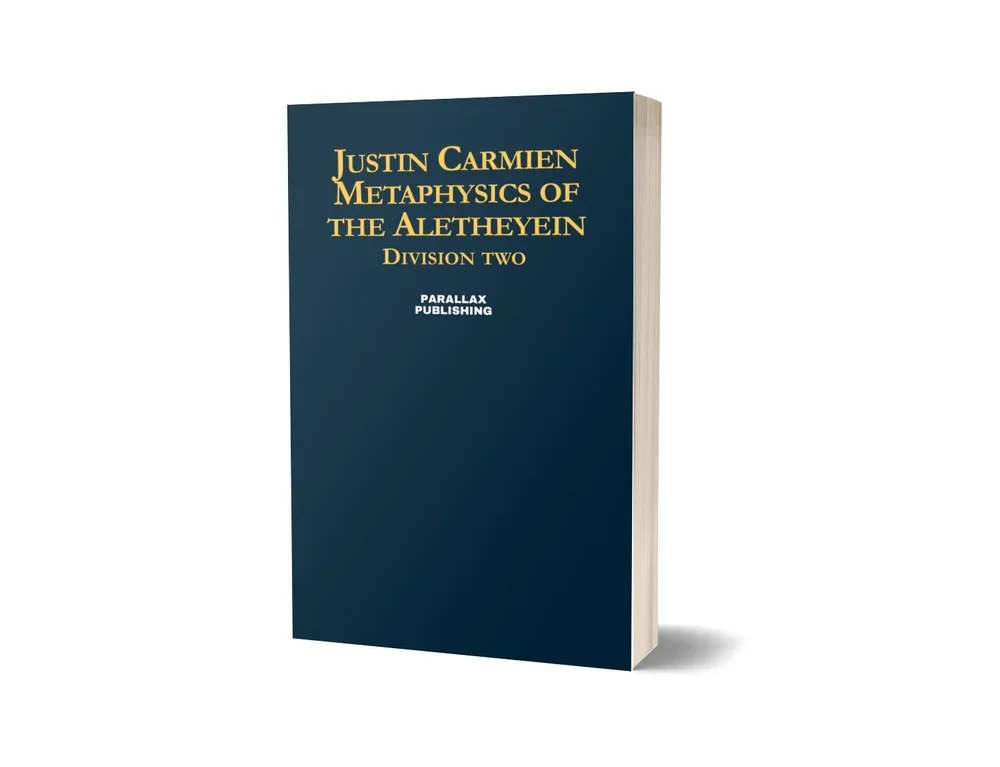
Coming soon
METAPHYSICS OF THE ALETHEYEIN: DIVISION TWO - INTRODUCTION TO FIRST ECONOMICS PHILOSOPHY
Easy Piece One: Post-postmodernism
Metamodernism is often presented as the successor to postmodernism, emerging after cynicism and sarcasm have eroded the modern project. In this telling, “metamodernity” appears as a generation’s attempt to reconstruct meaning following decades of cultural fragmentation, political exhaustion, and economic precarity. This reconstruction is typically framed as a personal or interpersonal endeavor: we rediscover purpose, retrieve narratives, and strive to orient ourselves toward the future with renewed sincerity. However, this approach implicitly favors individuals who have the institutional support necessary to rebuild their lives. It imagines metamodern transformation primarily as a form of self-work—spirituality. Any social transformation is in the hands of the spiritual aristocracy. The reality is more complex: meaning does not reorganize itself simply because we desire to live with greater depth or coherence. A metamodern reconstruction which ignores structural conditions inevitably becomes a luxury good; it demands that individuals rebuild themselves while leaving intact the systems which erode agency in the first place. Surely, this is the lesson we drawn from the tragedy of modernization depicted in Five Easy Pieces.
Easy Piece Two: Relational truth
Metamodern discourse often treats truth as fluid yet meaningful—neither the rigid absolutism of modernity nor the pure relativism of postmodern critique. This idea is appealing: truth as relational, emergent, and contextual. However, “relational truth” is typically invoked as a virtue rather than as a metaphysical structure. It becomes a way of saying that everything is interconnected without confronting the potentially uncomfortable realities of how truth is sustained, circulated, or stabilized. Panpsychist’s “We are all the universe experiencing itself through different bodies” is entirely unhelpful. If truth is relational, its emergence depends on the structures which mediate these relations; we can describe these structures as social, material, or historical. However, we can also describe them through metaphysics. The metamodern project demands articulating the mechanisms through which truth emerges, such that we might nurture confrontations with the good, moral, and the true, along with the evil, immoral, and the false. Indeed, we must be willing to confront “the evil nature of man” without desire for reconciliation and without the anxieties of progress weighing upon us. We cannot experience both crisis and truth. But relational truth does signal a crisis of truth.
Easy Piece Three: Metamodern Oscillation
Oscillation—between irony and sincerity, hope and skepticism, engagement and withdrawal—is perhaps the most distinctive feature of metamodern theory. Many take this oscillation as a psychological phenomenon: a flexible stance toward contradiction, a balancing of emotional registers, a way of shifting between moods without becoming cynical or naïve. However, this “both/and” approach is merely the surface expression of deeper structural tensions. Societies oscillate when they lack institutions capable of absorbing competing values. Individuals oscillate when their environments cannot accommodate the demands placed upon them. The popular reading of oscillation reduces a structural problem to an emotional technique. Yet, oscillation is not a personality trait; Five Easy Pieces taught us that oscillation is a symptom of systems unable to hold and sustain the internal tensions of truth.
Easy Piece Four: System Complexity
Contemporary metamodernism often embraces complexity: networks, emergence, nonlinearity, and systems within systems. Complexity signals sophistication—an acknowledgment that the world cannot be reduced to simple binaries or linear causal chains. But here again, complexity becomes a form of cultural capital. We admire systems from a distance, gesture toward interdependence, and treat complexity as a mark of enlightened awareness. Yet, this aestheticization of complexity ultimately mirrors the postmodern fascination with fragmentation: we marvel at the instability of systems without engaging with its consequences. To take complexity seriously is not to celebrate it but to become political. This is the metamodern response to Bobby Dupea’s suffering: design relationships which “release complexity”, allowing truth to find channels through which it can manifest.
Easy Piece Five: Post-subjectivism
Perhaps the most persistent assumption in both modern and metamodern thought is that subjects—whether individuals or groups—anchor truth. Modern thinkers grounded truth in the autonomous individual; postmodern thinkers, in the interpretive community. Many metamodern accounts retain this dual inheritance, emphasizing personal development, emotional depth, identity, or belonging as the core of metamodern transformation. However, subjectivist metaphysics, whether individualistic or sociological, cannot sustain truth. Indeed, individuals do not generate truth from their interiority, nor can groups ground truth simply by invoking shared experience. Both perspectives presuppose a world in which subjects create meaning rather than encounter the truth disclosed through common mediums: objects, systems, and civic structures which surround them. A metamodern philosophy adequate to our era must be both postsubjectivist and postsociological: subjects participate in truth’s disclosure, but they do not ground it. Bobby Dupea’s luxury was also his prison. His lesson: one cannot escape subjection to the truth, even in retreating from it.
This shift—from subjects to structures, from moods to mechanisms—marks the end of the popular “easy pieces”. And it is where First Economics Philosophy begins. In my Metaphysics of the Aletheyein, I strip truth from the human mouth, allowing it to become the subject matter of study itself. Drawing on Kant, Hegel, Marx, and Heidegger, I develop and describe the framework through which truth is mediated and actualized as objective. As an object-oriented metaphysics, this description, once applied to ethics and morality, provides directives for organizational management and policy. This application is the subject matter of the study’s second division, titled First Economics Philosophy. The easy pieces serve as invitations; the real challenge lies in submitting to the truth and designing the civic architectures through which it can sustain and act for itself, such that we might receive it and hold its internal tensions without retreating from it.
Justin Carmien is the author of the book Metaphysics of the Aletheyein. He currently serves as the president of his neighborhood association in Edgewater, Chicago, and works as a designer for the Government Finance Officers Association, a local government think tank based in Chicago.