
Comparison Between First Economics Philosophy and Metamodern Political Theory
(Appendix B - Excerpt from METAPHYSICS OF THE ALETHEYEIN: DIVISION TWO )
Remarks on the defeat of atheism and religious faith. Restating the triumph of sociology
Thirty-five years ago, a conflict raged between religion and science. The public display was especially pronounced in conversations surrounding figures such as Richard Dawkins, Daniel Dennett, Sam Harris, and Christopher Hitchens. These intellectuals, followed by many others, launched critiques of religious faith, arguing that wishful thinking, cognitive biases, and a lack of self-skepticism were harmful and could lead to negative consequences in society. To be sure, the attack was powerful. This is not merely my assessment; the evidence is reflected in the public responses to the critique, particularly those coming from Christians eager to defend their faith against marginalization. Even more telling was the respondents’ inability to step outside the worldview of “science”. Instead, they acquiesced to it. This is evident in the nature of their defense, which brought scientific data to their aid, both to affirm their story and to refute their opponents—citing geological evidence for Noah’s flood and carbon dating of artifacts, respectively. However, because of this, we can say that these “defenders of the faith” had already lost the debate before any words were spoken. Indeed, empirical data is not where religious faith shines. Faith is not meant to “discover” these types of truths. Instead, the strength of faith lies in volition. Empirical data, while useful in many projects, cannot account for all which is important, particularly in matters of metaphysics, ethics, and morality. For myself, having grown up during this period of debate, I found relief in Nietzsche, who critiqued both positivism and Christianity on their own terms. Ludwig Wittgenstein’s various phenomenological investigations also proved valuable, demonstrating that the physical description of experience is incomplete: love, hope, and grief, for example, cannot be reduced to descriptions of bodily phenomena. Likely, I was not the only one to notice the deficiencies in the debate between religion and science. Consider that today, and despite the vigor of the debate in its time, neither religion nor science can claim victory in this public spectacle. Yet we can say even more: these two “worldviews” were not the only losers in the conflict. Rather, we lost faith in a universal public “worldview” altogether. In today’s public discourse, no universal ruler or standard of judgement presents itself—human reason cannot supply it. Any rationality which attempts to push universal ideas forward will eventually be criticized as “authoritarian” or worse. This was the fate of both religion and physics. This remains true today, except in cases where they draw their force from yet another, now more powerful source: sociologic (that is, the logic employed in the discipline of sociology, for example). Indeed, the standards of sociology have become so relevant that they appear more pervasive in contemporary public discourse than even physics. In the public sphere, the same is true for religious faith. However, despite the end of belief in a universal worldview, conflict between peoples has not likewise ended. Rather, the failure of both science and religion has encouraged confrontation with something much more difficult to reconcile—personal preferences and diverse ways of life among different groups of peoples. What was popularly called the “culture war” in the news media during the early third millennium might best exemplify our current political stasis. In this stasis, both science and religion have retreated to their own closed circles.
For myself, sometime in 2017, an article posted on the Philosophy Matters Facebook page introduced me to the metamodern narrative. After reaching out to the authors of The Difference Between Post- and Meta-modernism, Daniel Görtz invited me to join a forum with the purpose of discussing and organizing the metamodern political movement. Before becoming involved in this movement, I had not spent much time with trained sociologists. Therefore, it was during this time that I first discovered my discomfort with their methods. At the same time, this experience proved to be fruitful. After all, it was my discomfort with sociology which allowed the discipline of metaphysics to present itself in contrast. Eventually, my intolerance for the critical methods common among sociologists allowed the thinking space of first economics philosophy to announce itself as an alternative. I remain convinced that neither science nor religious faith reaches deeply enough into experience—much like sociology, both remain committed to a description of causality without an understanding of the conditions and possibility for such description: such is the learning I have gained from metaphysics.
The metaphysics of the αληθευειν (aletheyein, “being to truth”) belongs to a realm of description which not only grounds all scientific investigation, religious faith, and sociological description, but its directives also suggest violence towards our current political economy. For those of us following these directives, liberal political economy has been loosened from its foundations. The αληθευειν calls us to reimagine civic life. Insofar as political metamodernism presents me with the most crystallized intellectual expression of the heir to liberal political economy, it demands to be reckoned with. Moreover, a comparison between first economics philosophy and political metamodernism is necessary. These two “doctrines” crystallize two diametrically opposing political strategies within late-stage liberalism.
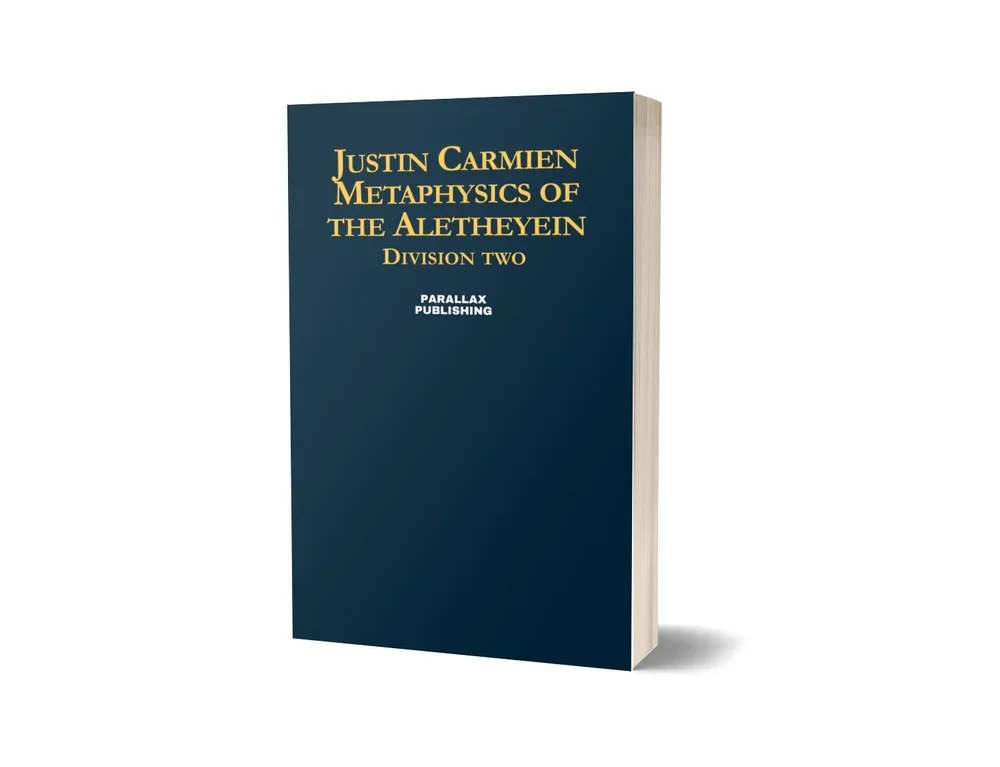
OUT NOW
METAPHYSICS OF THE ALETHEYEIN: DIVISION TWO - INTRODUCTION TO FIRST ECONOMICS PHILOSOPHY
Liberalism’s internal conundrum and the problematizationof critique; the announcement of metamodernism
Before we can consider political metamodernism, we should recapitulate our understanding of metamodernism more generally. A historical overview of the term’s usage will be helpful. To trace its origins, we can turn towards European intellectualism following the Second World War. During this period, we find a public debate surrounding figures such as Hans-Georg Gadamer, Jürgen Habermas, and Jacques Derrida, among others. We can further our understanding of this debate through a little-known academic paper from 2003, The Problem of Critique: Triangulating Habermas, Derrida, and Gadamer Within Metamodernism. In this paper, Steven M. Feldman identified a pronounced turn away from the metaphysical currents prior to the war, towards a novel application and expression of sociology. Specifically, Feldman located this expression within a thinking space which he named metamodernism,
“Metamodernism not only rejects epistemological foundationalism, but further dismisses these concerns as insignificant in comparison to other more pressing issues. Metamodernists tend to emphasize the operation and orientation of power.”
“Jürgen Habermas, for instance, unequivocally declares himself to be postmetaphysical.”
We can note that this turn towards “the operation and orientation of power” was not the result of any resolution or advancement within the realm of philosophy. Rather, it was a direct consequence of the atrocities of war. Consequently, although perhaps expected, this turn in intellectual debate also obscured philosophy—particularly metaphysics. Indeed, Feldman noted that metamodernists had abandoned “epistemological fundamentalism”—a metaphysical tradition which treats the Self as subiectum (“the cause or condition of the being of the world”) and as the subject matter of philosophy. This tradition can be exemplified by the philosophical writings of Descartes, Kant, and Edmund Husserl, among many others. In place of such fundamentalism, the metamodernist Gadamer (a student of Heidegger) placed the Self within a condition which is characteristically social—he called it tradition. Of course, this move within the transcendental architecture is neither novel to the present study nor particularly interesting outside of it: everyone immediately understands that any individual human animal is born into and raised by their traditions. However, this foundation does present a problem for intellectuals—indeed, these metamodernists found themselves caught in the middle of a paradox. Feldman framed this paradox as the problematization of critique within the metamodern paradigm,
“If we are always situated in a communal or cultural context, then how can we criticize either a particular interpretation of a text or, more broadly, a societal arrangement or organization?”
In other words, if there is no objective standard for societal arrangement, then “metamodernism problematizes critique”. This problem “leads us into the political conundrum”. Feldman argued that any abandonment of epistemological fundamentalism inevitably leads to epistemological relativism—or simply, relativism. In practical terms, if every local world narrative is conditioned by tradition, how can we responsibly justify critique? Faced with a rapidly modernizing and globalizing economy, on what foundation can world leaders and political activists justify their actions and beliefs over those of others? Indeed, even in more localized contexts, we hear concerns about “too much liberalism”—referring to the sentiment that the freedom of individual expression has come at the expense of social order and even safety. Therefore, are we reduced to mere realpolitik and power politics? Already, we can see how these answers are unflattering to intellectuals. For us, Feldman’s “problematization” and “conundrum” might appear either the most trivial or the most dire issue one could encounter. Yet, what should not be mistaken is that, in either case, it is not the intellect which decides for or against the value of such a problem. Its value can only be measured in terms of the reckoning which the problem provokes. Let us not forget that the writings of the metamodernists testify to the suffering which this problem has caused—and to that list of thinkers, we can also add the American philosopher of science Karl Popper. We recall that Popper paradoxically attempted to justify intolerance for the sake of liberalism. Therefore, Feldman’s announcement only encouraged a confrontation with the political problematizing of critique once again.
For us, Feldman’s problematization opened the space for dire considerations, including the future of liberal governance; it undermined the rational justification of liberalism. Consequently, we must next examine how metamodern proponents of liberal political economy have attempted to intellectually address this problem.
The Nordic Ideology, including a reflection on Denmark and Scandinavian listening
Feldman’s problem of critique can be said to have been answered roughly fifteen years after its initial formulation. It is at this point that metamodernism manifested as a political movement. As a movement, political metamodernism not only addresses the problem of critique but also defines objectives for the continuation of liberal political economy. Furthermore, it proposes strategies to achieve these goals. To reiterate, political metamodernism presents the most crystallized intellectual expression of the heir to liberal political economy.
In 2017, Emil Ejner Friis and Daniel Görtz continued the sociological tradition established by the early metamodernists. They did so by applying the adult developmental psychology framework developed by Harvard professor Michael Commons to sociological inquiry. Their book, The Listening Society, applies the learnings of this science to address the challenges posed by modern values and our liberal democratic infrastructure. In doing so, they also implicitly engage with Feldman’s problem of critique. What is their solution?—what could be described as social value periodization. The political metamodernists recognize that throughout history, human animals have faced social challenges specific to their times. In response, social values—or social value systems—are realized to mobilize solutions. Looking back through history, we find that these social values can be mapped as a progressive journey—one which facilitates modernization itself. Their understanding is that social value systems which mobilize a people to overcome their challenges are healthy; however, those same values become unhealthy if they retard solutions to the challenges faced by the next generation. Among all the world’s value systems, metamodern values are the most progressive, having succeeded both modern and postmodern values—which themselves followed the “Faustian values” of pre-modern times, and so forth. Equipped with this social development theory, the political metamodernist can critique any particular local world narrative while simultaneously affirming it as part of a developmental journey towards a transnational and global political economy. They have addressed the problem of critique. As previously suggested, one of the most important and pronounced features of the political metamodernists’ social value periodization model is the acknowledgment of the deficiencies of modern values and our liberal democratic infrastructure. Recalling from The Listening Society, chapter six, we find their quite poetic expression,
“The gods of modernity are false gods—the individual self, liberal democracy, liberal innocence, Left and Right, humanism, rationality (and ‘free will’), scientism, many forms of linear causation and equality are all outdated ideas. In the information age, and the new life conditions it brings, these golden calves must be rejected—even at great cost. We must discipline ourselves to be temple thieves; to pillage and desecrate the symbols of modern society.”
Of course, if their developmental model is to have efficacy in the political realm, they must also justify the so-called “metamodern values” as the most appropriate for managing our “new life conditions”. So, what exactly are metamodern values?
For Friis and Görtz, metamodern values are tantamount to an emerging value system particularly prominent in contemporary Sweden and Denmark. Collectively, they refer to the values of this system as “the Nordic ideology”. Among these ideals, animal welfare, stewardship of the natural environment, and the psychological welfare of the human animal are of paramount importance. The last of these is especially significant. The political metamodernists have identified that, to a large extent, modernization has been concerned with the material welfare of the human animal, resulting in a deficiency in its psychological or “spiritual” experience. We can note that, for these political metamodernists, ethical volition manifests in the phenomenon of “co-development”. Moreover, co-development requires the appropriation of many worldviews—or, in the language of Nietzschean commentators, many perspectives. It is through listening that one gains perspective. Therefore, we can say that for the political metamodernists, the ethical announces itself at locations which exhibit the capacity for listening—indeed, this capacity characterizes the political metamodernist activist. This ideal is so central to political metamodernism that it informed the name of their first book: The Listening Society. If you can accept this brief summary of the principal meta-modern values, we can continue. When we do, we might first observe our immediate reactions. Perhaps, like me, you will recognize the admirable nature of these values, despite their apparent lack of profundity. Still, there is a subtlety here worth expanding upon. Next, I will draw on my own experience to do so.
Having lived in Denmark for ten years, I have come to appreciate the value of what might be called Scandinavian listening. For those unfamiliar with this cultural phenomenon, I would like to acquaint you with it. Admittedly, I find that it is almost impossible to describe using examples from within the culture; it is best communicated through contrast. Indeed, when I returned to the United States, I experienced culture shock. Specifically, I felt bombarded with various campaigns promoting cultural awareness. This was not limited to news and private marketing campaigns, although they were included. More importantly, seasonal and monthly awareness campaigns competed for my attention: Breast Cancer Awareness Month, Pride Month, and Juneteenth are a few examples which come to mind, but there are undoubtedly thousands of others I cannot recall or have never encountered. These social sector campaigns demanded my time and attention. If we frame the phenomenon of “Justin Carmien” in terms of consciousness and consider this total phenomenon as a percentage, I felt able to dedicate only a small portion of myself to the things which were truly important in my life. Not only this, but my capacity to listen had also been hampered, likely due to a lack of “time with myself,” so to speak. In other words, I was encouraged to lose my “Danishness” and re-adopt my “Americanness”. Quite unfortunately, I had come to understand the American tendency to reduce individuals to mere stereotypes—both within social awareness campaigns and outside of them. When diagnosing the cause for the differing experiences between Danish and American societies, I did not attribute it solely to the United States’ market economy. Rather, I came to the conclusion that any society which values equality but adopts a non-integrative approach to immigration—such as the United States’ multiculturalism, in contrast to Denmark’s nationalism—will likely also suffer from the consequent celebration of “diversity”. Such diversity demands significant effort be spent on cultural recognition, the result of which can lead to a loss of self-care and a diminished recognition of the other as an individual. Moreover, I made one further observation: the geographical size difference between the Nordic states and the United States. This territorial parameter can also help explain the material well-being of their populations. It is no coincidence that high-functioning socialist states tend to be found in smaller, more culturally homogeneous nations with high levels of trust, such as those in Scandinavia. Until I see evidence to the contrary, it appears that social welfare programs only scale effectively alongside the authority which enforces them, as seen in countries like China or Russia.
However, when examining the literature on political metamodernism, particularly that produced by the Scandinavian political metamodernists, I notice that the conclusions I reached through my own experiences are entirely absent. Instead, the political metamodernists employ the aforementioned social value periodization model to conduct their diagnostics. They simply remark that the most value-advanced societies today are found in the Scandinavian countries; the causes of this remain largely unexplored, and readers are encouraged to move on to what is already known. For the political metamodernists, this means both the goal and the strategy of political metamodernism. Both the social developmental model and the Nordic ideology present a clear path forward.
The political metamodernist goal: the listening society
Our recapitulation of the Nordic ideals has led us to consider the political metamodernist goal and strategy. We will first consider the goal. To do so, we can remark on the major current running through the adult developmental psychology in The Listening Society—namely, healing from trauma. Although trauma is not explicitly identified as a primary catalyst for political metamodernism, it becomes apparent through the many references to psychological trauma throughout the text, particularly in discussions of family dynamics and the relationships across genders and generations. We can reasonably infer that if the political meta-modernists had their eye on the United States, they would also address trauma stemming from racial conflicts and tensions as well. In fact, psychological trauma is cited frequently enough throughout The Listening Society to suggest that this phenomenon alone encouraged the conceptualization of political metamodernism. From chapter three, we recall,
“There is a great fabric of relations, behavior and emotions, reverberating with human and animal bliss and suffering, a web of intimate and formal relations, both direct and indirect. Nasty whirlwinds of feedback cycles blow through this great multi-dimensional web, pulsating with hurt and degradation. My lacking human development blocks your possible human development. My lacking of understanding of you, your needs and perspectives, hurts you in a million subtle ways. I become a bad lover, a bad colleague, a bad fellow citizen and human being. We are interconnected: you cannot get away from my hurt and wounds. They will follow you your whole life—I will be your granddaughter’s abusive boyfriend, your belligerent neighbor from hell. And you will never grow wings, because there will always be mean bosses, misunderstanding families and envious friends. And you will tell yourself that is how life must be.”
Once trauma is recognized as the principal trigger for political metamodernism, we can better understand the title of the first book: the listening society is the primary tool for addressing these traumas. This implies that, unlike psychologists working in clinical settings, the political metamodernists understand that the responsibility for healing from trauma does not rest solely on the individual and their paid professional but instead requires appropriate social conditioning. Indeed, the listening society is not simply you, not me, and not all of us together. Rather, it is a condition for the Self and the Self’s actualization. According to Friis and Görtz, political metamodernism must therefore,
“deliberately and carefully cultivate a deeper kind of welfare system that includes the psychological, social and emotional aspects of human beings.” (The Listening Society, chapter three)
Furthermore, the political metamodernists understand that this condition might also prevent future experiences of psychological trauma. And because of this, establishing this condition becomes the primary goal for the political metamodern activist. Chapter three continues,
“Metamodern politics aims to make everyone secure at the deepest psychological level, so that we can live authentically; a byproduct of which is kindness and an increased ability to cooperate with others; a byproduct of which is deeper freedom and better concrete results in the lives of everyone; a by-product of which is a society less likely to collapse into a heap of atrocities.”
Insofar as psychological trauma functions as the trigger for political metamodernism, we can infer both its strategy and the character of that strategy—that is, how the strategy for achieving a listening society is embodied. Understanding how this strategy is embodied also tells us something about the metamodern activist. Indeed, for those of us following the directives of the metaphysics of the αληθευειν, we immediately notice that the political metamodernists’ animation of psychological trauma echoes Schopenhauer’s concept of suffering. For the political metamodernist, the ethical shows itself in the capacity for compassion. This can be confirmed by recalling, from The Nordic Ideology, specifically the chapter on existential politics,
“It is the goal of political metamodernism to extend compassion to this whole fabric of hurt and bliss, to society in its complex entirety, to the co-emergent inner worlds of countless millions.”
And because the experience of compassion always arises within a specific time and place—within an actual location—the political metamodernists seek to occasion the conditions under which compassion arises. Indeed, they turn towards state infrastructure for such conditioning, envisioning the civic canvas as a platform through which the co-emergence of individual “inner worlds” can occur,
“Structures, norms and institutions can help us grow and turn our painful misfortunes into meaningful lessons learned and an awakened awareness of the suffering of the world, and they can help us rise to the capacity to act upon such a sense of tragedy.” (The Nordic Ideology, chapter fourteen)
Indeed, the strengthening of the state’s democratic infrastructure primarily characterizes the prescriptions of political metamodernism. This involves investing in the legitimacy of democratic selection, ensuring the reliability of empirical investigation—that is, cultivating measurable, evidence-based practices across the public sector—and fostering deeper deliberation on matters of genuine civic concern. Among the many programs proposed in The Nordic Ideology, one stands out as particularly pronounced, especially when considered against the backdrop of the municipal and regional opportunities for the production of relational goods examined in our study. The political metamodernists propose the “secular monastery” as a location of compassion—that is, a site for the co-emergence of individual “inner worlds” and for healing both personal and intergenerational traumas. Recalling again from The Nordic Ideology,
“The purpose of metamodern monasteries would be to offer all citizens necessary periods of seclusion (and/or community) and concentrated honing of inner skills, such as healing from trauma, making crucial life decision or transition, learning new life philosophies, practicing meditation and taking care of the body, forgiving people who hurt us, sorting out ethical dilemmas, and other transformational practices.” (The Nordic Ideology, chapter fourteen)
By traditional definition, a monastery is a building or complex where monks or nuns live together in dedication to religious life. These communities follow a specific rule which combines prayer, labor, and service—sometimes extending to hospitality or education. We can imagine why the political metamodernists have chosen the monastery as a symbol for institutionalizing “transformative practices” within a secular society. Moreover, we might borrow from the traditional model to envision life within a metamodern monastery. While the monastery’s functions do not necessarily demand a rigid hierarchy and might operate quite egalitarianly, seniority is often determined by the order of entry into the community. Typically, the monastery is structured with an abbot or mother superior at its head, followed by officers such as the prior and other obedientiary roles, and then the general body of monks or nuns. Thus, although The Listening Society and The Nordic Ideology do not describe daily life in such a community, we can infer the figure of the monastery “initiate” and imagine the flow of participation in and out of its walls. The metamodern monastery appears less as a literal space of seclusion and more as an institutional metaphor for disciplined self-work within the civic body. It represents a location for the political metamodernists’ inner development, framed through the moral language of co-development. Though, when we extend the metaphor beyond its liminal and transformative function, the picture begins to shift. What emerges is not merely a spiritual retreat but a model for social organization—one which subtly reintroduces hierarchy, authority, and moral tutelage under the values of listening and self-development. Having considered the diagnosis and the political metamodernists’ goal of addressing psychological traumas, we can now proceed to consider this hierarchy, authority, and moral tutelage. Indeed, our consideration of the “metamodern monastery” has prepared us for examining the metamodern strategy itself—and to question whether its institutional imagination can truly accommodate the plurality it celebrates. To do so, we will consider the metamodern activist—a figure which is central to the political metamodernist strategy.
The political metamodernist strategy: liberal elitism
When considering the political metamodernist strategy, we recall that their solution to the challenges of co-development requires the appropriation of many worldviews—many perspectives. To paraphrase their own words, those with the most perspectives win. For any political metamodern activist equipped with a multi-perspective backpack, the call to action is to formalize an international network—namely, a metamodern aristocracy. For the political metamodernists,
“The metamodern aristocracy are people who have a combination of factors in their psychological, existential and cognitive constitutions that allow them to play a certain role on the new historical world stage. But they are also people of social, economic, and cultural privileges, who have the time, energy and emotional fuel, to expect for abstract endeavors such as developing the future of the world-system.” (The Listening Society, chapter five)
The political metamodernists are well aware that the word “aristocracy” carries a negative stigma. Indeed, they deliberately invoke this stigma to provoke and excite the reader—they are being ironic. At the same time, social value periodization suggests that hierarchy is natural, and the political metamodernists also understand it as healthy. For them, the metamodern aristocracy constitutes the top of this social hierarchy. In other words, it forms a transnational governing body responsible for guiding the world towards “the future world-system” through various industries spanning the private, social, and public sectors. While the ironic usage is literary, the underlying strategy is earnest.
Immediately, we notice that the metamodern aristocracy crystallizes and affirms what is commonly referred to as liberal elitism. This is particularly significant for anyone observing American political discourse. The United States Democratic Party is frequently criticized as the party of the elite—that is, the college-educated. However, I have yet to hear any party member openly embrace this description. Political metamodernism, by contrast, represents a clear and deliberate endorsement of such elitism. Not only do the political metamodernists affirm it, but they also prescribe its capitalization. As has been suggested, underlying the political metamodernist call for spiritual safe spaces is a framework of social organization, hierarchy, and moral tutelage. Indeed, there is a reason why “liberal elitism” is often used as a slur against voters and party members; there is an intuitive hesitation towards such self-proclaimed authority, which is starkly anti-democratic. The “metamodern aristocracy” does not merely refer to trendsetters, influencers, or other public figures who subtly steer the political economy through private, public, or social sectors. Rather, this strategy also shapes the very form of governance itself. We will now consider the consequences of this strategy within the governance framework of political metamodernism.
The consequence of the political metamodernist strategy
When considering the consequences of the metamodernist strategy, we must first note that any idolization of listening in the service of “winning” appears quite perverse. While a diverse backpack of perspectives is intrinsically valuable, it comes with destructive consequences. Appropriating another’s perspective does not simply add to one’s own; it also destroys the original perspective in equal measure. There is no genuine “multi-perspectival” view of the world—there can only ever be one perspective—“one’s worldview”. On this point, it is instructive to recall Martin Luther King Jr.’s critique of educational projects premised on epistemic totalitarianism and its imperialism. In his autobiography, King reflects on Hegel’s “exposition of the coming to be of knowledge,” noting that absolute idealism “swallows the many in the one”. While we might contest this interpretation of Hegel, King’s warning against epistemic domination remains resonant: liberal elitism often assumes the posture, “I must educate you until we agree”. Such a mindset is domesticative, and for this reason, the political metamodernists’ approach appears troubling. Indeed, the project of cultivating listening among a population, while simultaneously advancing a social value periodization model, presents a philosophy in tension. Genuine listening will require a preparation for confronting “the evil nature of man”, its “ugly truths”, and receiving the other without immediate judgement. Scandinavian listening, as I have experienced it, is characterized by asking questions, attending to the answers, and understanding oneself in relation to those answers. It is not to develop your own political arguments, educate the other, or advance value systems. This strikes me as characteristically American. However, for those of us following the directives of the metaphysics of the αληθευειν, we recall our phrasing: the character of the ethical does not announce itself at the location of listening but rather in the capacity to receive that which is other and hold the other in a position of tension—allowing the location to sustain itself without forcing reconciliation or assimilation. Thus, while the political metamodernists are correct that values and institutions must support the human animal’s activity of listening, the framework they offer is not always the neutral space for ethical engagement which it purports to be.
To test these ethical claims, we can examine the political metamodernists in practice—specifically Friis and Görtz, whose public activities provide instructive case studies. If metamodern ethics are defined by the capacity to receive the other and maintain in a place of tension, both Friis and Görtz fall short. Friis, for example, struggles to reconcile with voters who have supported Donald Trump, failing to grasp the “attractor” which guides much of the American electorate. Görtz, meanwhile, has difficulty acknowledging the experiences of those facing transphobia. While such fears might be irrational, they are nonetheless real and must be engaged with in both private and public forums. Both Friis and Görtz have demonstrated limited tolerance; and in practice, they attract political actors who categorize transphobic experiences as “hate” rather than confronting them as genuine phenomena which individuals have been subjected to. These observations suggest a structural consequence of the metamodernist strategy: liberal elitism risks privileging certain perspectives while marginalizing others. Listening, in principle, becomes subordinated to a hierarchy of judgement, and the “attractor” of societal attention and ethical engagement is prescriptive rather than emergent. In other words, the political metamodernist strategy cultivates multi-perspectival tools, but its implementation demonstrates the limitations of applying listening ethically within hierarchical and elitist frameworks. Indeed, within the political metamodernist program, the question remains: whose experiences are acknowledged, and whose are disciplined in the name of progress? For us, we remember our directives; we must be prepared to confront “the evil nature of man” without passing judgement upon it. This entails averting both anticipations of the truth and frustrations over its internal tensions.
Incompatibility between first economics philosophy and political metamodernism. Defining alienation, rootlessness, estrangement. Subject-oriented politics and object-oriented politics. Reflections on the metaphysics of the realdialektik and transnationalism
No doubt, the similarities between the political metamodernism and first economics philosophy are immediate. Both can be said to generally prioritize well-being beyond the mere material benefit to the human animal. Indeed, the catalysts for the announcement of political metamodernism and the metaphysics of the αληθευειν arise from the same political stasis. For us, we have identified late-stage liberalism. The defining symptoms of this political stasis—alienation, rootlessness, estrangement, apathy, and resentment—frame the challenges these projects confront.
We define alienation as the loss of the ability to determine both one’s life and destiny when deprived of the right to: first, regard oneself as the director of one’s own actions; second, determine the character of one’s own actions; and third, own the items of value produced by one’s own labor. This lesson has been handed down by Marx. Rootlessness refers to estrangement from what is produced in the proximity of the workshop—through trades, guilds, and apprenticeships—and is characterized as being of the people and of the land. The location of rootlessness is found particularly in the suffering of the German Conservative Revolutionaries, especially Heidegger. Estrangement describes the experience of confronting a “public” which is neither a you or a me, but rather a no one in particular. Looking into history, estrangement is particularly evident in the writings of the American social critic Walter Lippmann, but it can also be found in the work of John Dewey, among many others. When these social critiques address “the public”, both you and I slip into nonexistence. If we consider the impact of this inauthentic dialogue, we encounter what Nietzsche called a “pathos of distance”. Undoubtedly, “liberated” Americans had come to enjoy the fiction of the misguided stranger—the individual blamed for electing corrupt politicians and enacting self-defeating legislation. Estrangement highlights the failure of liberal political economy; it signals an unhealthy political economy—namely, a democracy of strangers. The consequence of these three symptoms is pathological: we observe both apathy and resentment. Within late-stage liberalism, we confront the truth that the very product of modernization—the supersized modern empire—had marginalized not only indigenous cultures but also the individuals comprising majority demographics as well.
Yet, while the ironic presentation of political metamodernism strikes me as fresh, and the explicit capitalization on a liberal elitist strategy is surprising, treating these two features as the novel aspects of political metamodernism reveals a body of literature ripe for critical analysis. Such analysis has value. Although sociologic provides us with useful tools to advance beyond the material well-being of the human animal, our understanding can be further enriched by bringing in the tools on offer through metaphysics. When we do so, it becomes clear that the social value periodization proposed by political metamodernists does not so much solve Feldman’s problem of critique and epistemological relativism. Instead, truth remains relative, insofar as whatever is true is both temporally real and is relative to a third-party ruler and standard of judgement called development. The political metamodernists admit as much. Metamodern truths are not the final stop; those truths are provisional—merely “the best we have”. Yet, the same concession is not made about their framework, and such a concession cannot be made without causing the political metamodernist narrative to collapse. The substance of this developmental framework is the realdialektik. The realdialektik is atemporal. So, while human animals might quest for an empire which can never be fully established, the quest itself is eternal. This eternal struggle animates an anticipation of the truth. When the truth is encountered, along with its inherent tensions—specifically, that which is as yet undecided—the quest engenders frustration. Insofar as the realdialektik will always be “developed” according to the highest value systems of any given time, those who uphold the highest values will inevitably drive the “development” of the realdialektik through anticipation. This implies that aristocratic governance is not merely the preferred form of governance today—it is necessarily so for all eternity. Aristocracy emerges as the winner among Aristotle’s various models of governance. Nevertheless, this form of governance might always be marked by frustration towards the truth, or even its outright rejection. To my understanding, this conclusion has not been addressed in any political metamodernist literature to date.
For those of us following the metaphysics of the αληθευειν, development cannot be understood as the result of cosmic forces of nature. It is not some metaphysical substance which plays with social values as a tool for actualization. Indeed, we must acknowledge that such an anticipatory metaphysical architectonic would rob volition from the world altogether. This is not a dramatic metaphysical assertion; rather, it simply means that if there were no primordial πραξις (praxis, “application or use of knowledge, practice, convention, habit, custom”) between every human animal, non-human animal, machine, and intelligent program, along with every other phenomenon, prior to the moment of the here and the now, then development could not be. When placing the πραξις in its proper place within the metaphysical architectonic—as the condition for development—development is freed from the imperium (“command”) of the metamodernist. In other words, development results from the volition which we have described through metaphysical language as the αληθευειν, not the other way around. Given this, it becomes clear that Nordic ideals such as co-development could never be achieved through domestication at the hands of a metamodern aristocracy—even if each of us belonged to that aristocracy and even if the domestication manifested as pure self-discipline or self-sacrifice. Moreover, if we return the human animal to nature, then nurturing “man” also means nurturing nature, and vice versa. Therefore, we cannot assume the existence of a higher type of man—a “metamodern overman”—who stands in relation to those beneath him. A return to value management through Nietzsche’s master-slave dialectic strikes us as regressive—even if that dialectic is managed by way of a fantastic every one/no one, like the fictional Hanzi Freinacht, or through the actual hierarchy, authority, and moral tutelage of the metamodern aristocracy. If we invoke the language of the overman at all, it must be as a goal. “Not man, but overman is the goal”, says Nietzsche. This goal does not belong to the category of “man” as a type of superman but can only be achieved by being beyond the object “man” as an object to be reckoned with. Once we are over “man”, once that designation no longer makes sense as a metaphysical category and remains merely a physical description of the male-gendered human animal, only then will the overman have “inherited the earth”. In short, when volition is granted to the αληθευειν, manifest as emergent truth, then no aristocracy is possible. The ontological collapse of the special being of “man” allows the discipline of metaphysics to announce itself. Sociology, just like religion and science, must be transcended. With this move, first economics philosophy announces itself.
Let us conclude. Succinctly, we can say that political metamodernism is a subject-oriented program for political action: it foregrounds human animals, their identities, and treats development as a goal defined by the judgement of these demographics. It esteems a supersensible “intersubjectivity”. Its developmental model anticipates the truth, while its ethical project of co-development is enacted through social engineering, which is itself conditioned by negative triggers such as trauma. Alternatively, we are directed towards an object-oriented political activity. This directive is encouraged, perhaps above all, by the various political battles fought over identity and the weaponization of suffering and victimhood. We understand why drawing boundaries and further stratifying populations strikes us as thoroughly unethical. We have experienced fatigue from such identity politics. However, when we allow ourselves to be captured by the objective, the subjective recedes. In this space, a properly sensible world emerges from the shared, grounded in the common. Indeed, first economics philosophy begins with the object—the shared medium of interaction (Hegel). Thus, we animate goods production rather than focus on self-development. Moreover, our approach preserves volition, allowing the truth to show itself uniquely in each moment, unburdened by judgements which rest on the baggage of historical “development”. It also respects the showing of the actual and authentic I, allowing alienation, estrangement, and rootlessness to be addressed on their own terms. We do not experience “crisis”. We can also say that our approach honors the actual and authentic I when and where it shows itself—whether that appearance occurs at the morphology of human animals, nonhuman animals, machines, or intelligent programs—recognizing that nurturing human animals requires “giving room” to the ecology which sustains them. Finally, and perhaps most importantly, the metaphysics of the αληθευειν has liberated the location as the primordial object of political activity—we treat the here and the now as the condition for every appearance and action. Explicitly, this object takes precedence in our political program, before any values, identities, or institutions. Indeed, within the immediacy of the location, volition first becomes visible; and it is only here that the actual we can emerge authentically. The sculptor does not command the clay, nor does the clay command the sculptor; rather, the form arises in the relationship where the hand and clay material present themselves as secondary objects. Similarly, koinial political action manifests in the relation where the actor and the acted-upon arise together. It is here that the truth emerges—not as a revelation from above, nor within the actor, but in the movement of the hand through the clay of the location. What follows from this act is neither a location of nationalism nor a step towards cosmopolitan transnationalism, but rather expressions of truth which arise horizontally among the particulars. To act politically, then, is to act within the horizon of those relations—to dwell upon the truth, along with its internal tensions, and to sustain its showing as a form of attending to its needs. For us, the real does not unfold across the cosmic landscape of the realdialektik; instead, it unfolds in space, throughout the possibility constellations in mutual revelation. Thus, the primary object of political economy is not the nation or the international market of goods and services, but rather the place where the αληθευειν announces itself.
Justin Carmien is the author of the book Metaphysics of the Aletheyein, Div One & Two. He currently serves as the president of his neighborhood association in Edgewater, Chicago, and works as a designer for the Government Finance Officers Association, a local government think tank based in Chicago.
He hosts a seminar on Compassion After Truth— from Metaphysics to Civic Life, starting March 15h.